Your B2B Meta account has been running for 90 days. The dashboard shows leads. The CRM shows nothing. That is not a targeting problem — it is an event architecture problem. Most B2B Meta accounts are configured for B2C funnels: wrong optimization event, wrong attribution window, no offline conversion loop. This playbook walks through the three-stage fix that turns a leaking Meta account into a measurable B2B pipeline channel.
B2B SaaS marketers, demand-gen leads, and growth marketers running Meta as a complement to LinkedIn and search. If your average deal size falls between $5k and $50k ARR with sales cycles of 30–120 days, this playbook was written for how your funnel actually works — not for DTC. You already know LinkedIn conversation ads convert cold traffic at cost. This is the complementary layer.
Meta is built around a B2C model: optimize for purchase, use short attribution windows, target by interest. None of that maps to B2B. When a buyer is one person on a five-person committee and the meaningful conversion happens 60-plus days after the click, the B2C default reports zero pipeline and teams pull the plug at day 30.
The real issue is event selection. B2B teams optimize for purchase events that fire a handful of times per week — far below the 50 weekly conversions an ad set needs to exit the learning phase. The algorithm never stabilizes. CPL climbs. The account gets declared dead. Even campaign budget optimization can't compensate when the underlying event fires too infrequently for any meaningful signal.
I've seen this exact pattern on accounts running $30k/month — solid targeting, strong creative, completely broken event architecture. Swap the optimization event, add offline imports, and the same creative structure starts generating qualified pipeline. The channel was never the problem. Ad attribution measurement is the gap most B2B teams never close.
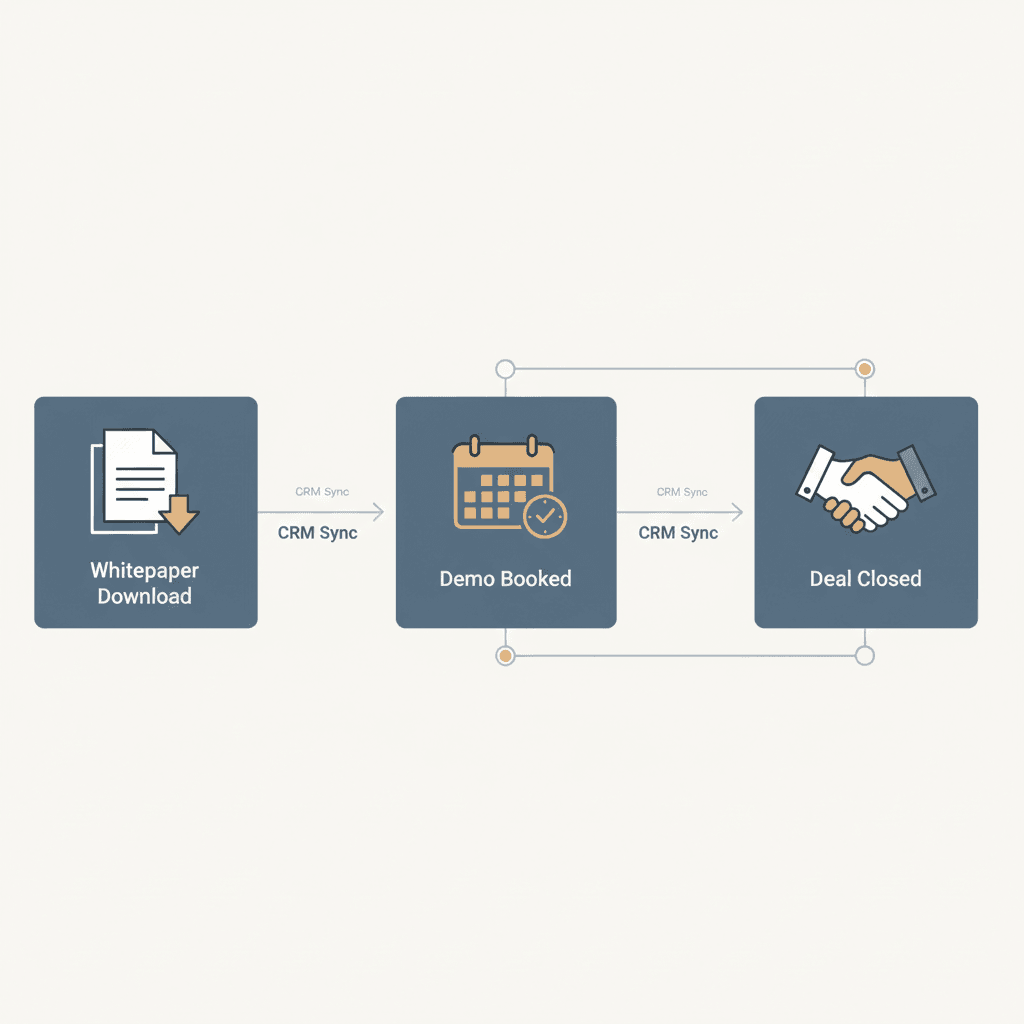
A three-stage B2B Meta playbook fixes the event architecture problem at every funnel layer. Stage 1 optimizes for a free-content lead magnet — a calculator, benchmark report, or deep-dive whitepaper — gated with a high-quality form and a Lead optimization event on broad audience. This gives the algorithm 50+ weekly signals to stabilize on.
Stage 2 retargets the lead pool with case-study video and demo-pull creative, optimizing for Demo Booked when that event fires. Use server-side tracking via the Conversions API to capture events that the pixel misses post-iOS14. The ad fatigue diagnosis workflow is worth running here too — if demo-pull creative flatlines, frequency and audience overlap are often the culprit, not the offer.
Stage 3 closes the loop: upload Closed Won events from HubSpot, Salesforce, or Close as offline conversions 60–90 days after click. Without this step, the algorithm has no signal about which leads became customers. With it, you can build lookalike audiences from won customers — not from leads — which is the single biggest lever in B2B Meta targeting. Set 28-day attribution windows across every ad set. B2B sales cycles do not surface signal at 7 days. The AdLibrary ad timeline analysis feature is useful at this stage: pull competitor creative timelines to see which angles they've been running long enough to prove out — survival duration is a proxy for conversion signal.
The B2B-specific moves: optimize for content download, not purchase; use 28-day attribution; upload offline pipeline events; build lookalikes from Closed Won customers. Flip all four, and you have a B2B Meta channel instead of a misconfigured B2C one. The unified ad search tool accelerates stage 1 creative research — filter by competitor, content type, and run-length to identify which lead magnets are converting in your category. Pair it with the spend scaling roadmap once cost-per-lead stabilizes and you're ready to push budget into the channel.
A B2B Meta channel producing measurable pipeline within 90 days at sub-LTV CAC. Leading indicators — cost per lead, lead-to-MQL rate, demo-booked rate — track toward SQL within the attribution window. The account exits the learning-limited state once weekly Lead events clear the 50-conversion threshold. By day 60, offline import data starts surfacing which lead sources produce MQLs; by day 90, Closed Won signals enable the Advantage+ audience optimization layer to compound.
Teams running this B2B Meta configuration correctly see CPL compress as the lookalike improves — the opposite trajectory from accounts stuck on the B2C default. Use AI ad enrichment to surface which lead-magnet creative angles are driving the highest-quality leads, not just the most form fills. See how the post-iOS14 attribution rebuild use case handles the signal recovery layer if your account predates the Conversions API rollout.
