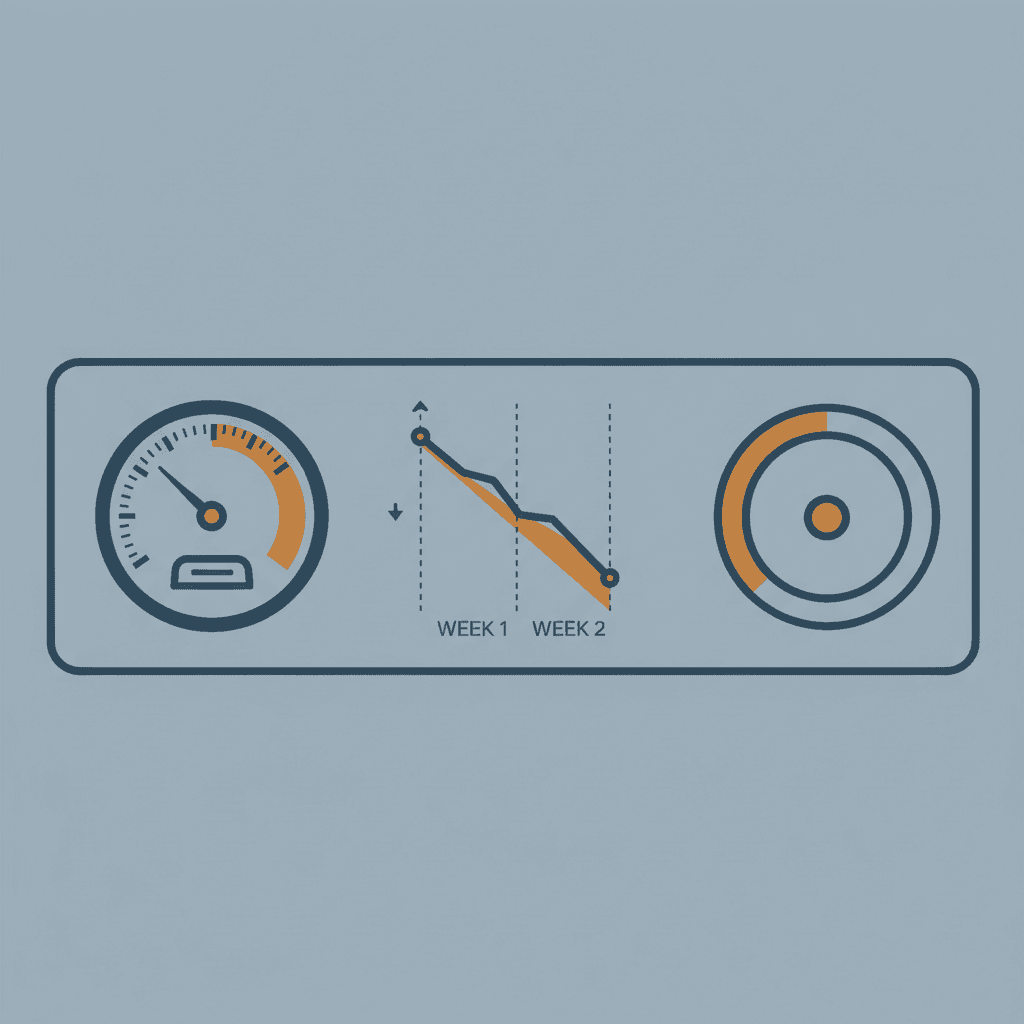
Your CTR dropped 25% last week. CPA is up. Frequency sits at 4.2. The default response is to brief new creative — but ad fatigue diagnosis requires confirming whether you are dealing with creative exhaustion, audience saturation, or learning-phase volatility before touching a single asset. Those three causes look identical in a dashboard and respond to completely different fixes. This protocol runs the ad fatigue diagnosis in 20 minutes.
Solo media buyers and small in-house teams running Meta campaigns at $50k–$500k/month who need a structured diagnosis — not a vibe-based refresh cycle. If your CTR or CPA has drifted mid-flight and you cannot confirm whether ad fatigue, audience saturation, or a learning-phase reset is the cause, this protocol replaces gut instinct with a 20-minute structured read.
CTR drops 25% week-over-week. CPA creeps 18%. Creative refresh cadence breaks down when teams jump straight to 'brief new ads' without confirming the actual cause. That is the most expensive mistake in Meta buying — and it only gets fixed with a proper diagnosis.
The real problem: ad performance decay has three distinct causes, and only one is ad fatigue. The other two — audience saturation and learning-phase volatility — will not respond to a creative refresh. Running the diagnosis without separating those signals means wasting a full production cycle on fresh creative that lands in an exhausted pool.
The Meta Andromeda update adds a compounding variable: placement mix shifts now happen automatically, meaning a one-week CTR drop may reflect delivery moving to lower-performing surfaces — not creative exhaustion. Without a structured diagnosis, you cannot tell the difference.
Ad fatigue has three distinct signals, and each has a different fix. I built this protocol after burning two months of creative cycles at a $200k/month DTC account on the wrong diagnosis — refreshing creative while the real issue was audience saturation on a 40k retargeting pool. The protocol takes 20 minutes and systematically eliminates each cause.
The framework: frequency audit → CTR decay pattern → audience saturation check → learning-phase status → targeted fix. Each step eliminates one cause before moving to the next. You never brief a creative refresh until steps one through four confirm that creative is the problem, not audience saturation or learning-phase churn.
AdLibrary's ad timeline analysis and unified ad search feed directly into this workflow: before briefing new creative, pull what competitors are currently running in your category. If their creative refresh cadence is every 14 days and yours is every 60, the data confirms the problem rather than guessing.
For budget optimization after a diagnosis, see how to optimize Meta ad budget. For systemizing this into a repeatable routine, Facebook ads workflow automation covers the automation layer. Context on how algorithm changes shorten creative angle lifespan: Meta ads integrations that matter and AI for social media advertising.
A 20-minute ad fatigue diagnosis that tells you whether performance decay is creative exhaustion, audience saturation, or learning-phase noise — before any creative is refreshed. Saves 1–2 weeks of production cycle per event. When creative refresh is confirmed as the fix, use saved ads to build a targeted swipe file and AI ad enrichment to surface the structural patterns that are currently working in your category. See the media buyer workflow for the full daily practice context, and best Meta campaign builders 2026 for tooling that supports this diagnostic approach.
