Ad fatigue occurs when your target audience sees the same ad too many times, leading to declining engagement and rising costs.
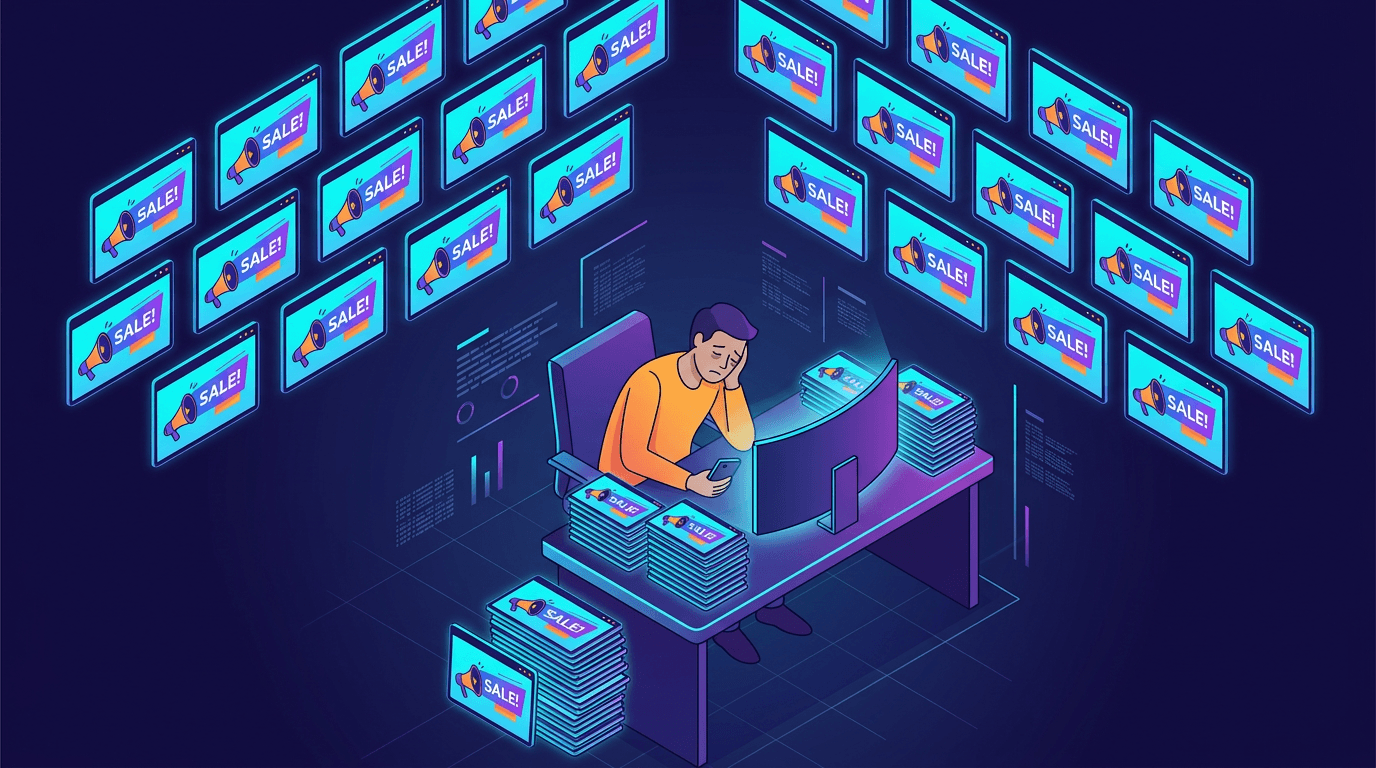
Ad fatigue is the gradual decline in ad performance that happens when the same audience is repeatedly exposed to identical creative. Key indicators include dropping click-through rates (CTR), increasing cost per acquisition (CPA), and lower engagement metrics over time.
The typical threshold for ad fatigue varies by platform: Facebook ads often show fatigue after a frequency of 3-5, while display ads may fatigue faster. Common solutions include rotating creative variations, refreshing ad copy and visuals, adjusting audience targeting, and implementing frequency caps.
Monitoring ad fatigue is essential for maintaining campaign efficiency. Tools like AdLibrary help marketers study how top brands rotate their creatives to combat fatigue, providing inspiration for fresh ad variations.
Ad fatigue is one of the most common — and most costly — performance killers in digital advertising. When your audience sees the same ad too many times, engagement drops, costs rise, and your campaign slowly bleeds budget without delivering results.
On Meta Ads, ad fatigue typically sets in when frequency exceeds 3-4 for cold audiences and 8-10 for retargeting audiences. You'll notice CTR declining, CPM increasing (because the algorithm detects lower engagement), and CPA climbing. On Google Display Network and YouTube, the thresholds can be even lower because users are in a passive consumption mode.
The real danger of ad fatigue is that it doesn't just hurt the fatigued ad — it can damage your entire account. Audiences that develop "banner blindness" to your brand become harder to re-engage later. Platforms may also reduce your ad's quality score or relevance score, making future campaigns more expensive. Proactively monitoring frequency metrics and having a creative refresh schedule is essential for sustained performance.
