An Attribution Window is the time period after an ad interaction during which a resulting conversion is credited to the ad — Meta's defaults are 7-day click and 1-day view, configurable per campaign.
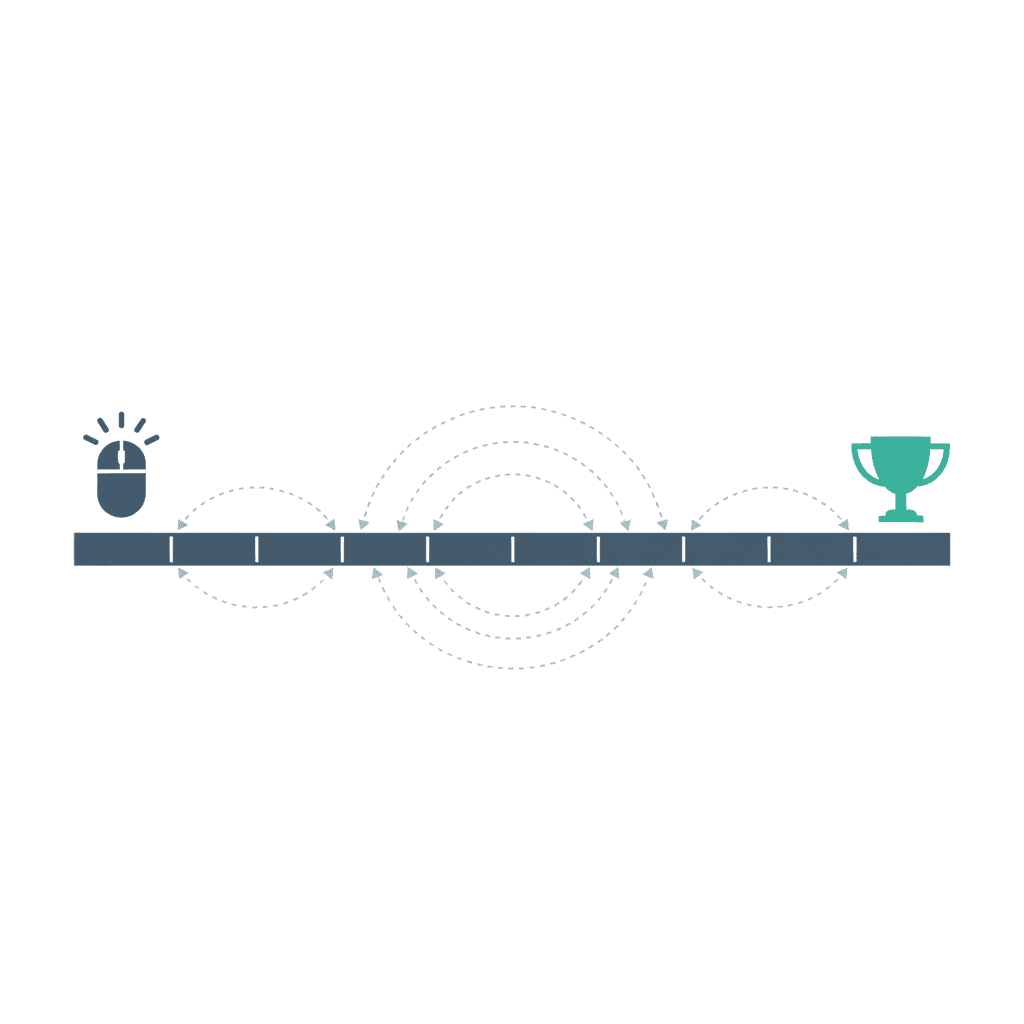
An attribution window is the defined time period after an ad interaction — a click or a view — during which any resulting conversion gets credited to that ad. It is the answer to "how long after someone sees your ad are you willing to count their purchase as yours?"
Meta's defaults are 7-day click and 1-day view. A click on Monday at noon means any purchase through the following Monday at noon is attributed to that ad. A view-through conversion uses a much shorter window: if someone saw the ad but did not click, only a purchase within 24 hours counts.
The window choice directly shapes which campaigns appear to be working. A considered purchase — a $200 supplement subscription or a SaaS trial — often resolves 3 to 5 days after first exposure. On a 1-day-click window, that campaign looks underpowered. Switch to 7-day click, and the same spend looks profitable. The attribution model you pair with the window adds another layer: last-click attributes 100% of credit to the final ad, while multi-touch attribution distributes credit across the conversion funnel.
Under Andromeda's delivery architecture, Meta's algorithm uses attribution window data as a training signal. Shorter windows give the model fewer labeled conversions, which can cause Learning Limited status on moderate-budget campaigns. A window change is not a passive reporting decision — it reshapes what the algorithm trains against.
When we look at campaign patterns across AdLibrary's ad corpus, direct-response DTC campaigns with short consideration cycles show negligible ROAS differences between 1-day and 7-day click windows. The gap grows sharply above $60 AOV or whenever the path involves email nurture or multiple site visits. For app campaigns on iOS, SKAdNetwork postbacks replace the classic window entirely. Understanding window mechanics is foundational to optimizing Meta ad budgets correctly — and to diagnosing the iOS attribution errors that surface when CAPI is misconfigured.
The practitioner principle: set your window before launch, document the decision, and never compare CPA across ad sets running different windows.
Picking the wrong attribution window systematically misreads campaign performance. At higher AOV or longer consideration cycles, default 1-day-click windows under-count winning campaigns by 30% or more — campaigns that look like losers on short windows are often profitable on windows that match the real consideration cycle. We have watched media buyers kill campaigns for underperformance that were, on a correctly matched window, their account's best performers. Get the window right before you optimize anything else.
