You're running retargeting on Meta at $30k/month and ROAS has plateaued at 3.5x for three months straight. Frequency is climbing. Budget is cycling through the same two audience buckets — site visitors and cart abandoners — while creative refresh after creative refresh produces no lift. The problem isn't the creative. It's that you're treating eight different intent levels as one audience. This playbook walks you through building a six-segment retargeting taxonomy that matches creative tone to purchase intent at each stage.
Performance media buyers and ecommerce brand operators running retargeting on Meta, Google, and TikTok at $20k+/month. If you currently treat warm audiences as one or two pools and have plateaued on retargeting ROAS despite healthy creative production, this taxonomy is the missing layer. It assumes active campaigns, existing audience infrastructure, and the ability to build custom audiences by behavioral event.
Most accounts run paid social re-engagement in two buckets: site visitors and cart abandoners. The consequence is a single creative tone hitting completely different intent levels in the same pool. Someone who browsed the homepage for 12 seconds is in the same audience as someone who loaded a product page four times and abandoned a checkout session. They see the same ad, at the same frequency, with the same offer.
The result is predictable: ROAS plateaus at 3–5x, frequency stacks unevenly across intent tiers, and creative refresh cycles burn budget without lift because the new creative still lands in the wrong audience context. Page viewers who never engaged, cart abandoners who hit a friction point, and post-purchase customers who already converted all receive the same ad — and all respond poorly for completely different reasons.
The deeper issue: without segmentation by intent, you cannot run different creative tones to different audiences — which means you're making the bluntest possible version of every warm-audience dollar you spend. The data from your highest-performing week is hiding inside this structural problem: certain segments convert at 8–12x ROAS when given the right tone, but they're being dragged down by the same pool averaging to 3–4x. See advanced audience segmentation by market awareness for the awareness-stage theory; this playbook covers the operational build.
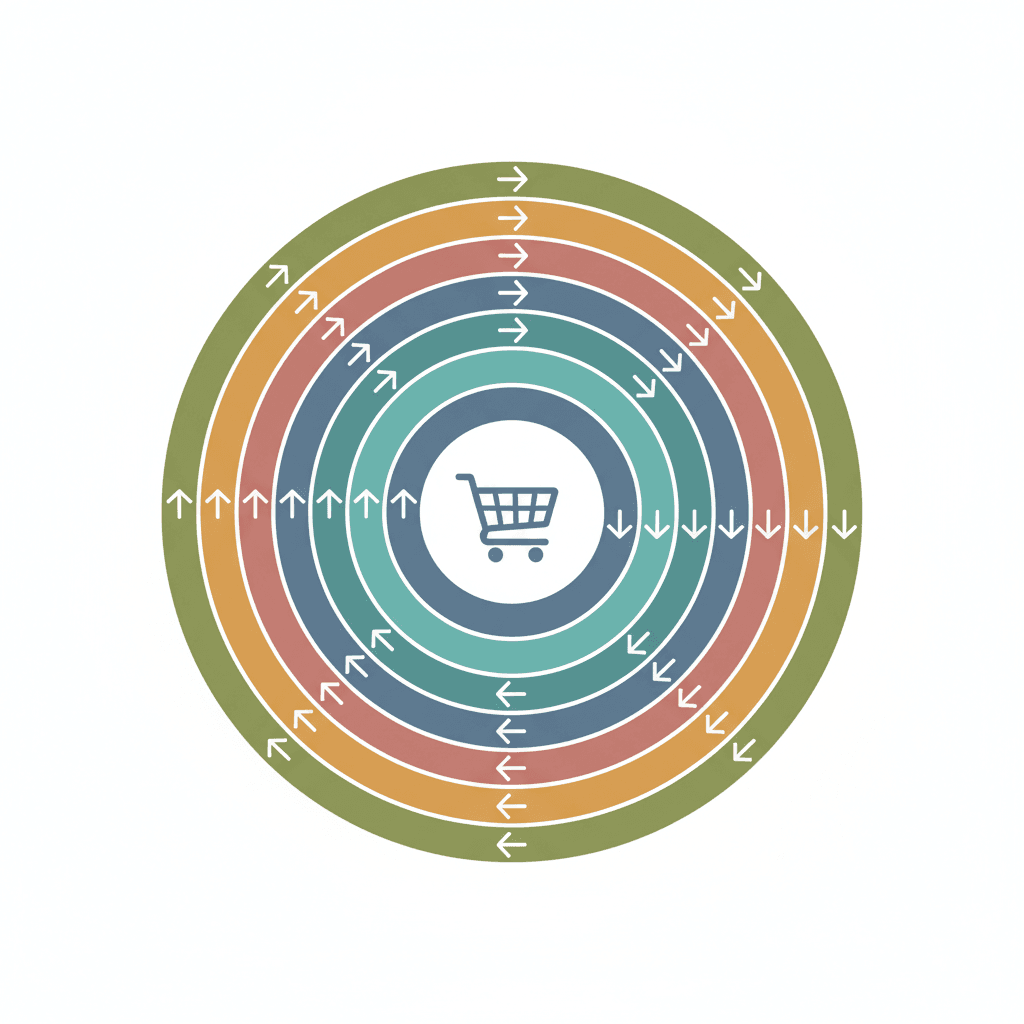
I've shipped this taxonomy on accounts ranging from $20k to $400k/month in retargeting spend, and the ROAS lift is almost entirely mechanical: it comes from matching creative tone to purchase intent. The framework is a six-segment taxonomy — 1-day cart abandon, 7-day cart abandon, 30-day site engagement, post-purchase 30-day, post-purchase 60-day cross-sell, and content-engaged but not on-site. Each segment gets a distinct creative angle, a distinct frequency cap, and a distinct refresh cadence.
The logic: frequency caps tighten as intent rises (you don't need to hammer a 1-day cart abandoner at 7 impressions/week — they'll convert or they won't), while creative tone shifts from awareness reinforcement for low-intent pools toward specific friction-removal for high-intent segments and upsell messaging for post-purchase. The 30-day warm traffic pool gets social proof and offer-driven creative; cross-sell gets complementary product framing that assumes a successful first purchase.
Most accounts that build this structure see retargeting ROAS lift 40–80% in the first 60 days — not from bigger budgets or better creative production, but from attribution-verified tone match. Before building your segments, use ad timeline analysis to see how long competitors are running each retargeting creative set — that cadence tells you where tone-match is already working in your category.
Segment-first retargeting is the only opinionated structural decision that reliably moves ROAS at fixed spend. Everything else — bidding strategy, placement selection, creative format — is secondary. Build the taxonomy first. The rest follows. For how this fits a broader ad fatigue diagnosis workflow, see the companion use case.
Retargeting ROAS lift of 40–80% over 60 days at the same spend. The lift comes specifically from tone-match: each segment sees creative calibrated to where they stopped in the funnel, not a generic brand message. You'll also see a measurable reduction in repeat-customer ad fatigue — post-purchase pools run at lower frequency and stop surfacing in cart-abandon flows, which lowers CPM across those audiences.
Once segments are running, use unified ad search to pull competitor custom audience creative as benchmark inputs for your refresh cycles. AI ad enrichment surfaces which hooks and offer structures are running long in your category — useful when briefing the next creative rotation across segments. Competitor ad research strategy is the starting point for building that practice.
For the creative testing mechanics that run inside each segment — how to structure a rotation, what format changes signal versus what offer changes signal — creative-first Facebook ads strategy covers the full creative operating model. Use saved ads to build a segment-specific swipe file: filter by ad type and recency, save anything in your category that has been running for more than two weeks, and tag by funnel stage. That swipe file becomes your creative brief input for each refresh cycle.
