Your cold audience ramp is five days in. CPA is three times target. The obvious move is to tighten your audience. That move will kill the ramp. Meta's algorithm needs reach diversity to find the right signal — narrowing too early locks you into a learning state trained on noise. This use case walks through the exact 30-day cold audience ramp protocol we use to build a structurally sound prospecting baseline from scratch.
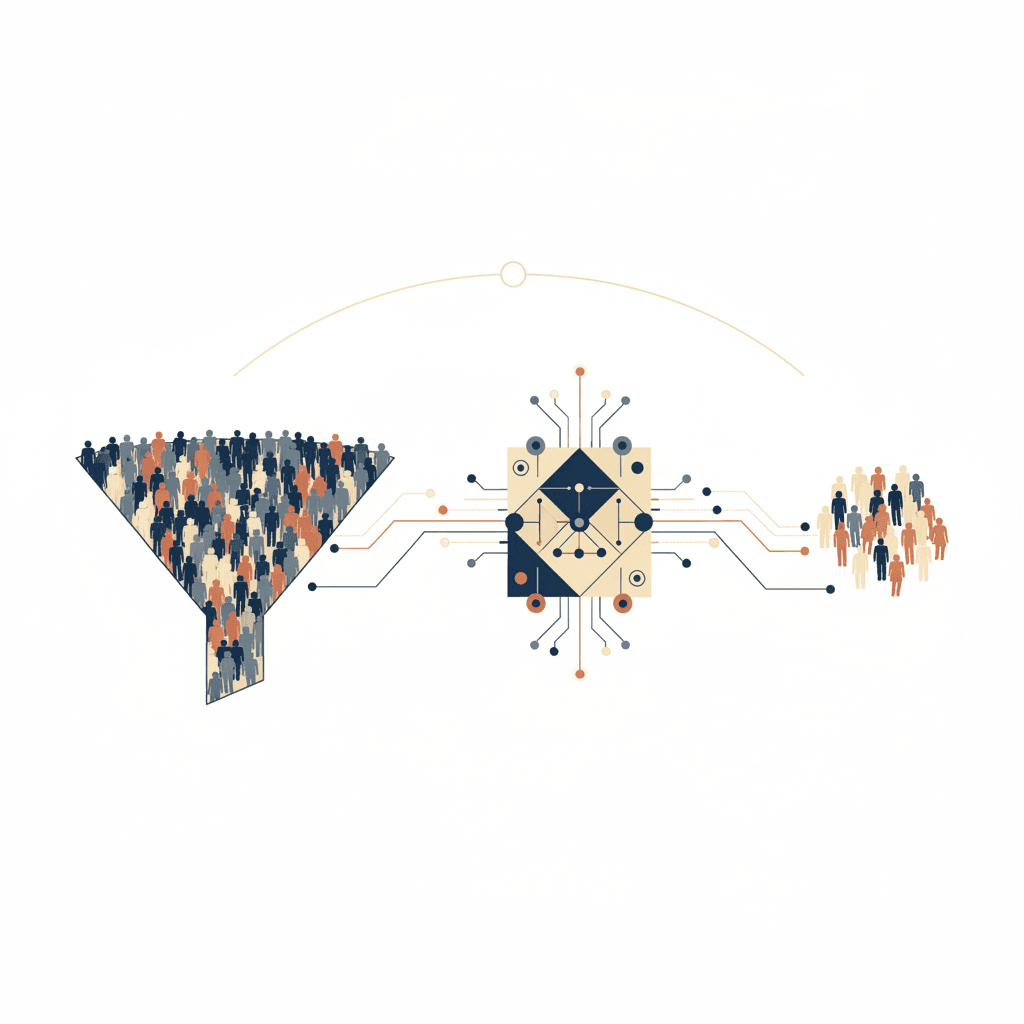
Performance marketers and ecommerce growth leads launching cold prospecting on Meta from a near-zero baseline — either at brand launch or after a long pause — with a $10k–$50k initial 30-day budget. If you are starting from scratch and need a method that survives the first week without making premature optimization calls, this protocol is for you.
Cold prospecting from zero looks manageable until day five, when CPA reads 3x target and the obvious move is to narrow the audience. That move is wrong. The algorithm needs reach diversity to converge — tightening at this point leaves you with a tight audience trained on the wrong signal, and a learning phase that never stabilizes.
Most failed ramps share three traits: audience too narrow from day one, optimization applied before 50 conversion events have fired, and budget paused or restructured mid-learning. Each intervention resets the algorithm's exploration and burns budget against re-discovery. The problem is compounded by using cold traffic metrics from learning phase as real-world signals — they are not. Day-3 CPA is exploratory cost, not performance data.
See also: why your Meta ads learning phase is taking too long and the structural fixes.
The answer is deliberate restraint: a 30-day ramp with a broad audience definition and a hard rule of non-intervention in week one. When I've shipped this loop for new ecommerce accounts, the instinct to optimize early is the single biggest threat to the ramp — not budget, not creative, not platform volatility.
The structure: broad targeting first (age + country + obvious exclusions only — no detailed targeting interests), a single creative angle mapped to the strongest brand voice, and optimization toward the deepest conversion event that fires 50+ times per week. Do not edit anything for the first seven days, regardless of what CPA looks like.
By day 14, ad sets have exited learning. CPA is comparable. By day 30, the ramp has produced the first retargeting data and a clean baseline for scaling. Advantage+ Audience and Andromeda perform best when you let them breathe — audience sizes in the millions, not the thousands. Narrow too early and you're paying for exploration in a space that can't convert.
The full breakdown of how we approach algorithmic ad targeting and creative assets is worth reading alongside this protocol if you're building the creative brief in parallel.
By day 30 your cold audience ramp has produced a structurally sound cold prospecting baseline: ad sets out of Learning Phase, blended new-customer CPA within 1.5x target, and a first warm pool of 5,000+ users ready for retargeting. The clean signal lets you scale or refine in month two — with actual data, not assumptions made on day-five noise.
For the next stage, the spend-scaling roadmap picks up where this one ends — taking a validated cold baseline and building the full $50k–$500k/mo scaling structure.
For a deeper look at how Facebook retargeting ads work once the warm pool is ready, the setup guide covers audience construction, signal quality, and creative fatigue management in a warm pool.
