Eugene Schwartz's five levels of customer awareness — Unaware, Problem-Aware, Solution-Aware, Product-Aware, Most-Aware — that determine how you write an ad's hook.
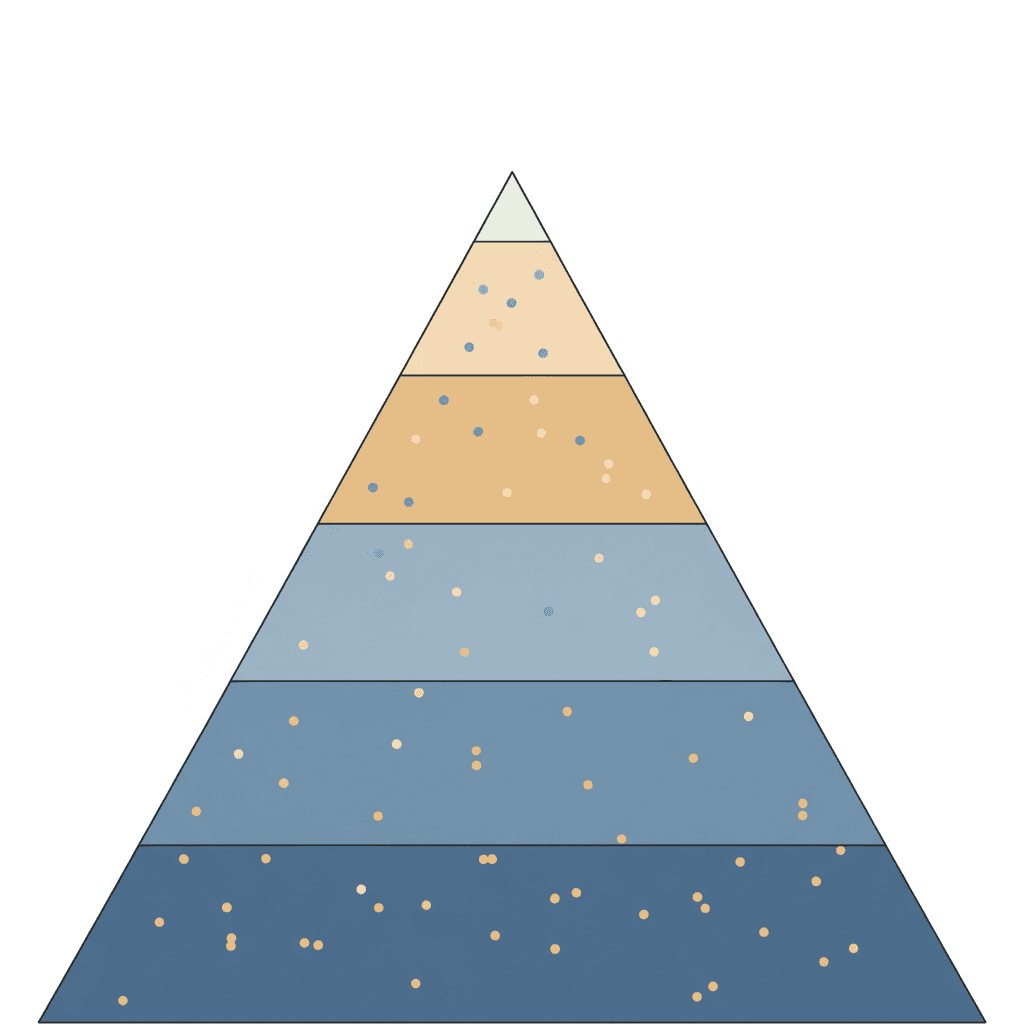
The levels of awareness are the five mental states a prospect can be in relative to your product and their own problem. Advertising legend Eugene Schwartz named these levels of awareness in Breakthrough Advertising (1966), and the model still governs how a strong ad opens. In order, they run: Unaware, Problem-Aware, Solution-Aware, Product-Aware, and Most-Aware. Where a reader sits on this awareness scale decides what your hook is allowed to say.
Schwartz's rule is that copy meets the reader where their head already is — a point the Copyblogger breakdown of Schwartz makes plainly: the more aware the prospect, the shorter your ad has to be. Same product, five different openers, one per awareness level:
This is the message-match principle: the further left a reader is, the less you may mention the product, and the more the ad has to earn attention through the reader's own situation. A Most-Aware coupon shown to an Unaware stranger reads as noise. A slow, empathetic problem story shown to a Most-Aware buyer wastes the click you already paid for. The awareness level is the single biggest lever on whether a hook lands.
Awareness is not the same as funnel stage. Funnel stage describes where someone is in your pipeline (cold, warm, retargeted). Awareness describes what's in their head. A cold-traffic viewer can be Problem-Aware and highly ready. A warm retargeting audience can still be only Solution-Aware. You write to the head, not the pixel. For the mechanics of segmenting by state, the market-awareness retargeting approach maps awareness onto audience tiers directly.
The levels of awareness are where scale comes from. To spend more, you move upfunnel: away from Product-Aware and Most-Aware audiences toward Problem-Aware and Unaware ones. The reason is arithmetic. People who already know your product or offer are a small, finite pool — you saturate them fast and frequency climbs. People who merely feel the pain your product solves are a huge, open pool.
Pain-driven hooks are what open that pool. An offer-aware hook ("Get 30% off our planner") only speaks to people already shopping planners. A pain hook ("Do you keep forgetting things you meant to do?") speaks to everyone with that frustration, which lets broad targeting and Advantage+ audiences find buyers you'd never have reached with a product name. Meta's own audience targeting guidance now pushes advertisers toward broad, algorithm-led delivery — which only pays off when your hook is written for a lower awareness level. The hook, not the targeting box, is doing the widening.
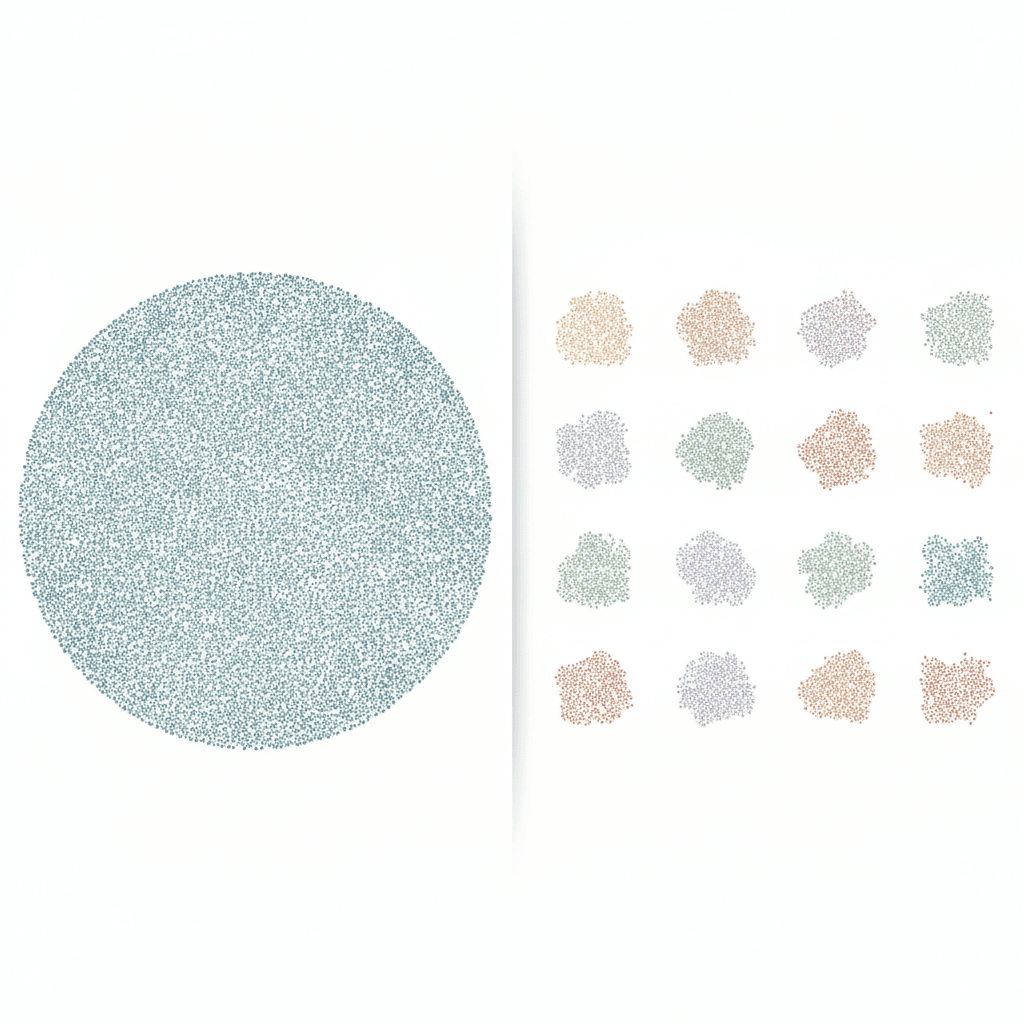
Then there's the 100 ponds, not oceans idea. Instead of writing one broad ad for one giant audience, you write many sub-specific ads, each call-out aimed at a precise avatar. "Mothers" and "grandmothers" are two ponds, not one ocean, and each drains cleanly when the hook names that person by name. A hundred small, precisely-matched audiences beat one broad average, because a specific call-out lifts hook rate and lets each ad survive on its own merits. This is audience segmentation done at the copy level rather than only the targeting level. Each pond gets a hook pitched to its own awareness level.
It compounds with creative supply. Each pond needs its own hook, so the more awareness-tuned avatars you write to, the more ads you need — which is why upfunnel scaling and creative volume are the same problem viewed from two sides. Building a lookalike from your best buyers gives the algorithm a warm seed; the awareness ladder gives your copy the range to keep feeding cold reach on top of it.
Practically, you can read the market's awareness distribution off in-market ads. When we look across creatives on adlibrary's unified ad search, the pattern is consistent: brands stuck at low spend run mostly Product-Aware ads, while the accounts scaling hard run a spread of pain-first hooks up the ladder. AI enrichment tags the angle of each ad, so you can sort a competitor's library by awareness level and see exactly which pain hooks are carrying their reach. That's the data layer under the theory — study what's working before you write your own hundred hooks.
