Hook Rate is the share of ad impressions where viewers watch past the first 3 seconds, used as the leading indicator of creative-stop performance before scroll, click, or convert.
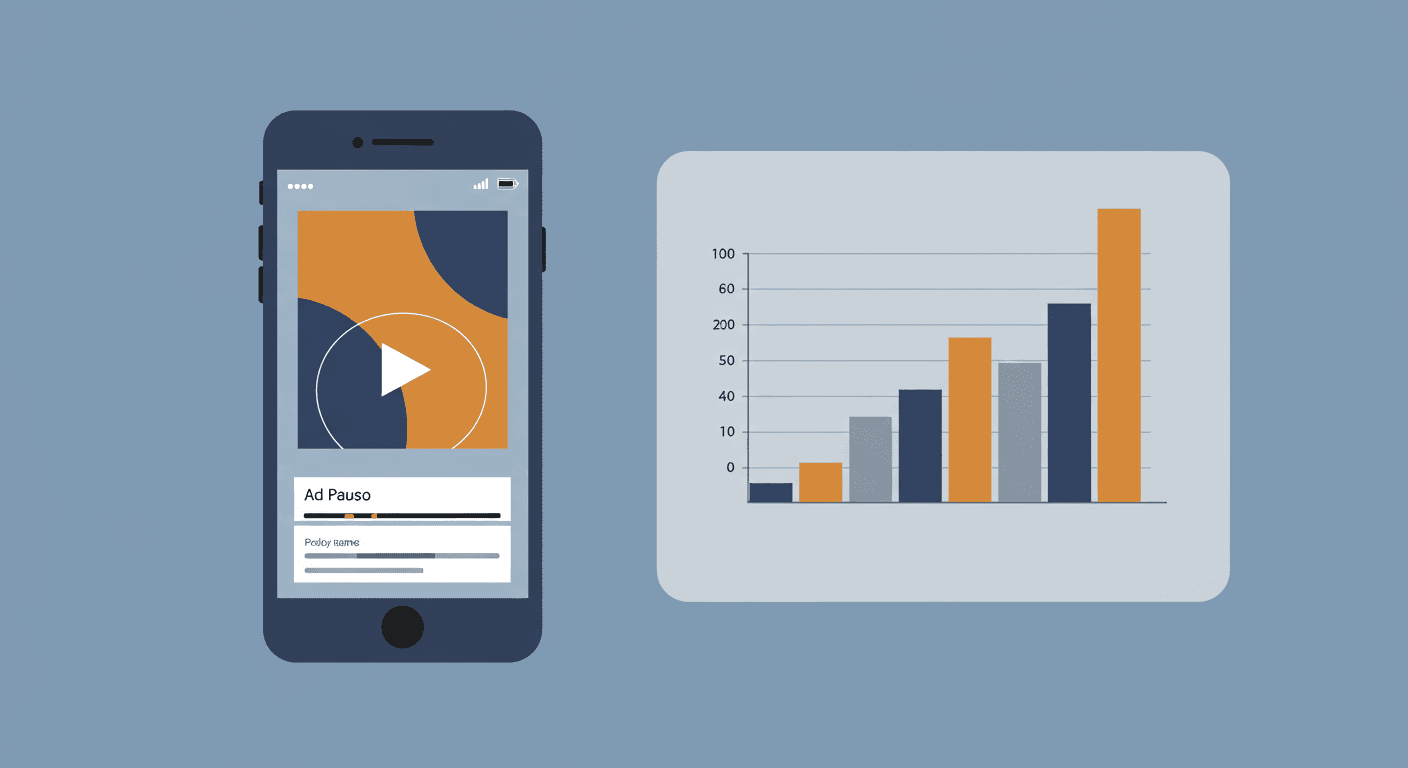
Hook rate measures the share of ad impressions where a viewer watches past the first three seconds. Think of it as the cost to earn attention, expressed as a percentage: if 1,000 people saw your video and 280 kept watching past second three, the rate is 28%.
The mechanism is simple. Feeds move fast. A viewer sees your ad for a fraction of a second before deciding whether to scroll. That micro-decision determines whether the rest of your creative — your offer, your proof, your call to action — gets any chance at all. This metric is the output of that decision. A low number means the opening frame did not hold the thumb. No downstream metric can fix that.
Platform behavior shapes the benchmark. Meta counts a 3-second view; TikTok's native "view" fires at 6 seconds. Cross-platform comparison breaks the moment you assume the denominators match. On Meta, ad sets in creative fatigue typically show hook rate decay 5–7 days before CPA drift registers in dashboards — making it a leading signal, not a lagging one. On TikTok, the video ad must earn the stop within two seconds because the algorithm samples completion rate heavily from the first play.
The 2025–2026 paid-media context makes this metric more critical. Meta's Andromeda delivery system allocates impressions at auction speed based on predicted engagement. An ad set with a chronically weak hook rate loses auction share to competitors before it can accumulate enough signal to exit learning phase. Advantage+ campaigns surface this faster, because creative consolidation means a single weak open damages the entire campaign.
We track opening-frame performance across thousands of ad creatives in adlibrary's ad intelligence layer. In the accounts where we see creative strategy iterated with hook rate as the leading filter — testing opening frames before scaling — CPA efficiency improves significantly in the first 30 days compared to accounts optimizing on CPA alone. For Facebook-specific frameworks, the guide on AI for Facebook ads in 2026 covers opening-frame testing in depth. For TikTok, AI for TikTok ads in 2026 details how the algorithm weights early retention differently.
Test the open, not the whole ad. Your hook rate problem is almost always a single-frame problem.
Most creative kills should happen at hook rate, not CPA. If 70% of impressions scroll past second three, no downstream optimization can rescue the unit — the budget is gone before the offer is ever seen. We watch hook rate first because it tells us whether the ad earned attention at all. Watching CPA without watching hook rate is debugging the wrong layer. Fix the open, then optimize the funnel.
