Eco-conscious pet parents read labels, prefer sustainable or plant-forward products and want gear that lasts. They are mostly 25 to 44. The brands here include Open Farm, V-dog, Wild Earth, Native Pet, Fable Pets, P.L.A.Y. and Awoo, covering food, supplements, beds, toys and accessories. Studying their ads shows how pet brands make sustainability tangible, balance planet claims with pet health, and win over owners who question every ingredient.
They check ingredients and sourcing, much as they would for their own food.
Vegan, plant-based and fungi-based foods from V-dog and Wild Earth appeal to owners who want a lower-impact diet.
Open Farm's focus on ethical sourcing and full traceability speaks to buyers who want to know where food comes from.
Fable Pets and P.L.A.Y. attract owners who prefer minimalist, long-lasting and eco-conscious products.
Sustainability matters, but not at the cost of the animal's wellbeing, so trust in nutrition is critical.
Awoo was founded around 2020 by Mallory MacDonald and Francine Evans — jewelry industry designers who bonded over their black rescue dogs and built a sustainable pet accessories brand using their supply chain ethics expertise. All products use GRS-certified recycled polyester turned from post-consumer plastics.
Fable Pets was founded in 2019 in San Francisco by Marshall Mosher and Nik Blanchet to make minimalist, durable dog goods with genuine sustainability credentials. The DTC-only brand operates a tight product line of collars, harnesses, bowls, and beds designed to last a dog's lifetime. Also searched as Fable.
Native Pet makes whole-food dog supplements in powder form — omega powders, probiotic blends, and joint support — using clean, recognizable ingredients. The brand targets pet parents who read labels carefully and reject synthetic additives, competing on ingredient transparency rather than flavor or format.
Open Farm was founded in 2014 in Toronto by Isaac Langleben and Jacqueline Prehogan to bring radical supply chain transparency to pet food. Every ingredient is traceable to its source farm via QR code on the packaging. The brand sells DTC, through Chewy, and in independent pet specialty retailers across North America.
P.L.A.Y. (Pet Lifestyle And You) was founded in 2009 in San Francisco by Gila and Ron Kurtz to create eco-conscious, beautifully designed dog beds and toys. Products use recycled PET fill and sustainable materials, and the brand distributes through DTC, Chewy, Amazon, and independent pet stores.
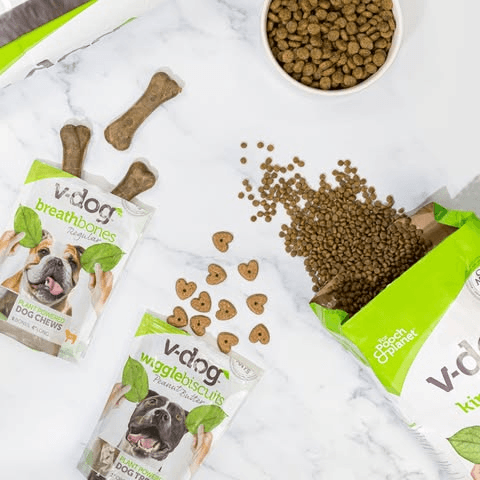
V-dog is a brand of vegan dog food and treats made from plant-based protein sources, sold online and through pet specialty retailers. It positions itself within the plant-based and alternative-protein segment of the pet food category. V-dog advertises across Meta placements to reach pet owners seeking vegan pet nutrition.
Wild Earth makes fungi-protein dog food using koji as a sustainable, complete protein alternative to meat. Founded by biohacker Ryan Bethencourt and featured on Shark Tank, the brand targets eco-conscious pet parents who want to reduce their dog's carbon pawprint without sacrificing nutrition.
Lead with the pet, then the planet. Owners want to know the product is good for their animal before they care about environmental benefits. Show a healthy, happy pet, then bring in the sustainability story as the added reason to choose you. Be specific about the eco claim. Recycled materials, traceable sourcing, plant-based protein or minimal packaging all mean different things. Naming the exact feature builds credibility, and vague green language invites suspicion. Answer the health question directly. For alternative-protein foods especially, explain nutrition and formulation clearly and avoid medical claims. Supplement brands can show ingredient transparency and simple whole-food formulas. Use visuals that show durability and design for accessories: the bed, the toy, the collar in daily use. Offer starter sizes, samples or bundles so a skeptical owner can try before switching. Real owners and their dogs make the most persuasive creators.
Open Farm positions on ethical sourcing and traceability. V-dog focuses on vegan dog food and treats, and Wild Earth on fungi-protein nutrition made with koji. Native Pet sells whole-food, additive-free supplements in powder form. Fable Pets offers minimalist, durable gear, P.L.A.Y. makes stylish, eco-conscious beds and toys, and Awoo uses recycled-material accessories. Avoid greenwashing, guilt-tripping owners and sweeping claims that a diet suits every animal. Avoid ignoring the vet question. When researching their ads, compare which sustainability claim leads, how health is addressed, and who speaks: a founder, an owner or an expert. Look at how product, pet and packaging appear in the creative, and what offer closes the ad. Differences between food and accessory brands show how the same values are expressed in different categories.
Open Farm, V-dog, Wild Earth, Native Pet, Fable Pets, P.L.A.Y. and Awoo sell sustainable food, supplements and accessories to owners who care about ingredients and environmental impact. Supplement and food brands add ingredient transparency and simple formulas, which speaks to owners who read labels carefully.
They lead with a happy, healthy pet, then explain sourcing or protein choices clearly. Open Farm stresses traceability, while V-dog and Wild Earth highlight plant-based or fungi-based protein. Others show a pet using the product daily, with details about materials and design that justify a higher price.
They show durable, well-designed products in daily use and name the specific materials or practices behind them, such as recycled materials or minimalist design. Name the material, the process or the ingredient, since owners can tell the difference between specific proof and vague green language.
Search these brands in AdLibrary to compare current ads, hooks and offers, and see how each handles sustainability claims. Saving ads over time shows which sustainability messages each brand repeats, and which ones it drops. Saving them over time shows which messages stay in rotation.
Search and save ads from every brand above across Facebook, Instagram, TikTok and more.
See all ads on AdLibrary →