
How to Start an E-Commerce Business: A Complete A-Z Guide
This comprehensive guide provides a step-by-step framework for launching and scaling a successful e-commerce business. Discover how to find a winning product, configure a high-converting Shopify store, create effective marketing campaigns, and build a scalable system to achieve your first revenue milestones.

Sections
Foundations for E-Commerce Success
Building a successful online store begins with a solid understanding of core principles and a realistic mindset. Before diving into products and platforms, it's crucial to grasp the fundamentals that separate thriving businesses from those that fail to gain traction.
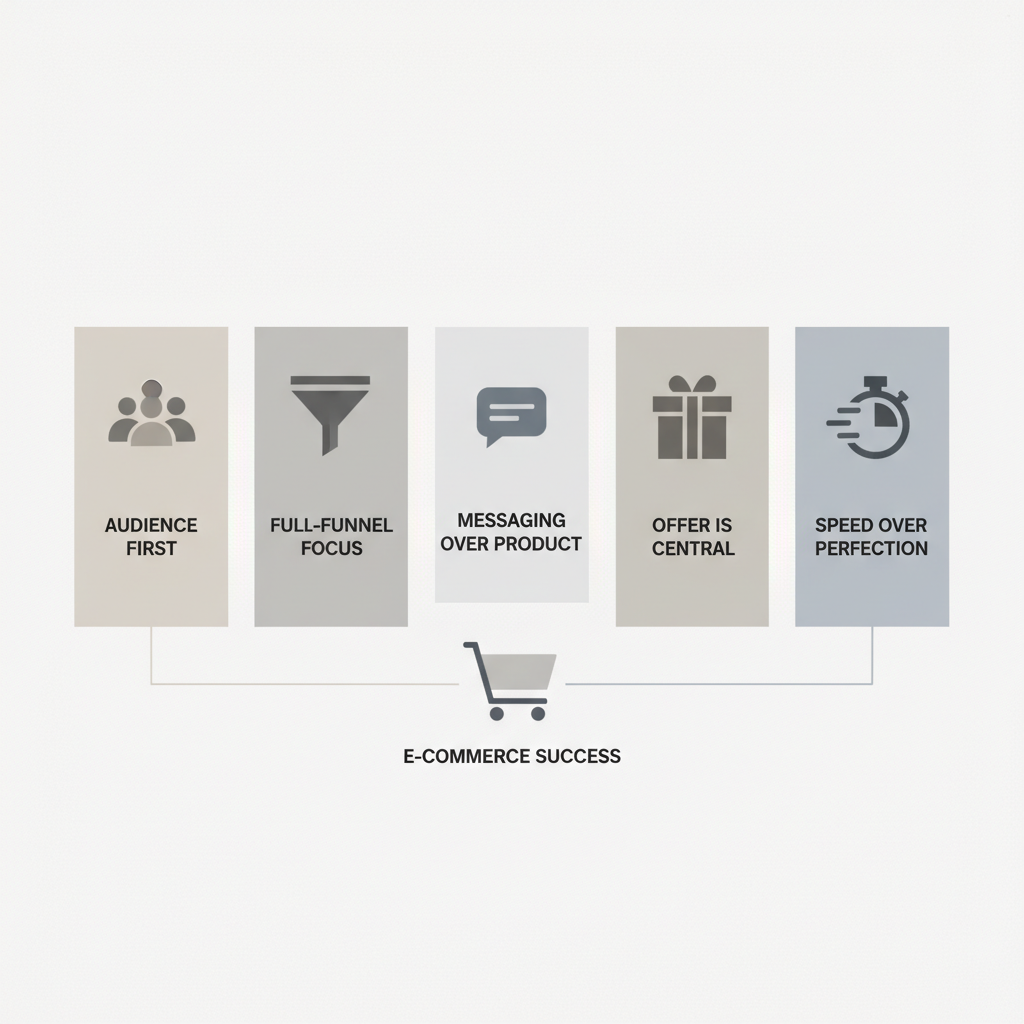
The Core Principles of Modern E-Commerce
Success in today's competitive market relies on several key pillars:
- Audience First: Instead of starting with a product and searching for customers, identify a market with a clear demand and create an offer that meets their specific needs.
- Full-Funnel Focus: A powerful ad is ineffective if it leads to a poorly optimized product page. Success is found in the seamless integration of every touchpoint, from the initial creative to the checkout process.
- Messaging Over Product: Customers buy transformations, not just products. Compelling messaging that clearly articulates a better outcome will always outperform a competitor with a slightly better product but weaker communication.
- The Offer is Central: A strong offer—which includes price, bonuses, guarantees, and perceived value—can make a mediocre product successful. Conversely, a weak offer can doom even the best product.
- Speed Over Perfection: The biggest obstacle for beginners is often perfectionism. Prioritize rapid implementation and learning from real-world data over endless planning.
The 5 Biggest Mistakes Beginners Make
Avoiding common pitfalls is as important as following best practices. Be aware of these frequent errors:
- Deviating from the Plan: Starting with a clear strategy but getting distracted by multiple YouTube videos, conflicting opinions, and shiny object syndrome. Stick to a single, proven path.
- Focusing on the Wrong Things: Spending hours on low-impact tasks like logo design or choosing brand colors instead of focusing on high-impact activities like offer creation, creative testing, and audience research.
- Testing Too Many Products: Quickly abandoning a product after a day or two of testing without proper analysis. Most failures are due to a weak offer or poor messaging, not the product itself.
- Lacking Real Product Validation: Becoming emotionally attached to a product idea without confirming there is a genuine, solvent market for it through data.
- Having Unrealistic Expectations: Expecting overnight success or passive income. E-commerce is an active business that requires consistent effort, patience, and a willingness to invest time and capital.
Phase 1: Legal and Financial Setup
Properly establishing the legal and financial foundation of your business is a non-negotiable first step. This ensures compliance, protects your personal assets, and enables smooth operations with payment providers and financial institutions.
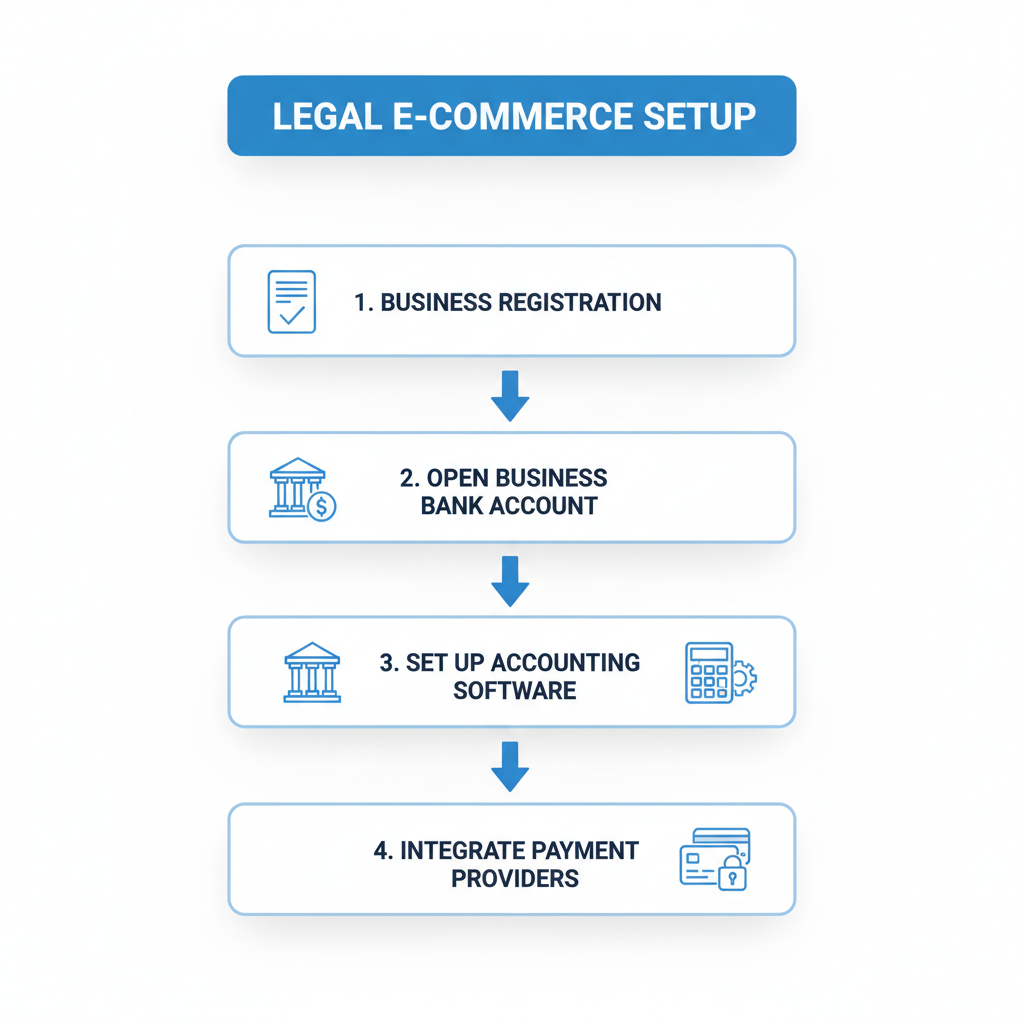
Registering Your Business
To operate legally, you must register your business. For most beginners, a sole proprietorship is the simplest and most common starting point. This process is typically straightforward and can often be completed online through your local city's business portal. The purpose of the business can be stated as "Online trade of goods."
Understanding Taxes and Accounting Basics
While you don't need to be a tax expert, understanding the basics is essential to avoid future problems. Key concepts include:
- Income Tax: Paid on the profits your business generates at the end of the year.
- VAT (Value Added Tax): Depending on your location and revenue, you may operate under a small business regulation (exempt from collecting VAT) or standard taxation (collecting VAT and claiming it on expenses). Standard taxation is often beneficial if you have significant advertising expenses, as you can reclaim the VAT. Consult a tax advisor to determine the best approach.
- Bookkeeping: From day one, document every transaction. Use a dedicated business bank account to keep business and personal finances separate. Tools like Selfdesk or Lexoffice can help automate the process of capturing receipts and generating invoices.
Setting Up a Business Bank Account and Payment Providers
A separate business bank account is mandatory. Payment providers like PayPal and Stripe require it and mixing funds creates an accounting nightmare. Digital banks like N26 or Qonto are excellent options for e-commerce entrepreneurs. For your store, you will need to integrate the primary payment methods your customers expect:
- Shopify Payments: The native solution for accepting credit cards, Apple Pay, and Google Pay.
- PayPal: An essential option for building trust and maximizing conversions, especially in markets like Germany.
- Klarna (or similar): A "Buy Now, Pay Later" option that is particularly popular with younger demographics.
Phase 2: Product and Market Strategy
The product you choose and the market you enter are the most critical decisions you will make. A data-driven approach to product selection and offer creation is the foundation for a scalable business.
The Winning Product Framework
A winning product isn't just a gadget; it's a solution that fits a specific market need. Evaluate potential products against these criteria:
- Problem-Solving vs. Desire-Based: Products that solve a painful, frustrating, or persistent problem (Problem Solvers) generally have a higher success rate and more scaling potential than items that cater to a desire or aesthetic (Desire-Based).
- Audience: The target audience must be sufficiently large, willing to buy, and clearly definable for marketing purposes.
- Differentiation: The market is saturated. You must differentiate through a better offer, a unique mechanism, superior creatives, or stronger messaging.
- Content Potential: The product must be easy to demonstrate visually. Strong before-and-after potential is a significant advantage for creating compelling ad content.
- Unit Economics: The numbers must work. A good rule of thumb is a selling price that is at least 3x your cost of goods, with an Average Order Value (AOV) over €50.
Data-Driven Product Research Methods
Avoid aimlessly scrolling through AliExpress. Use data-based methods to find products that are already proven to work:
- Paid Ads Research: Use ad intelligence tools to find products that are currently being scaled with significant ad budgets. A brand spending heavily on ads is a strong signal of a product's profitability. Filter for ads running in the US market, as e-commerce trends often appear there first.
- Social Discovery: Use platforms like the TikTok Creative Center to find products with high organic demand. Search for keywords like "TikTokMadeMeBuyIt" or "AmazonFinds" and filter for top-performing videos in the last 7-30 days.

How to Conduct a Competitor Analysis
Competition is proof of demand. Analyze your top 3-10 competitors to understand their strengths and weaknesses. Examine their product pages for messaging, visuals, pricing, and trust elements. Use the Meta Ad Library to study their ad creatives, paying close attention to their hooks, benefits, and overall communication style. This analysis will reveal opportunities for you to create a better offer and message.
Crafting a "Cold-Friendly" Offer
Don't just sell a product; sell an all-in-one solution. A "Cold-Friendly Offer" is a bundle or package designed to solve a customer's entire problem, not just part of it. This strategy increases your Average Order Value (AOV), strengthens your messaging, and reduces price comparisons with competitors. It's a powerful way to convert cold traffic (users unfamiliar with your brand) effectively.
Phase 3: Sourcing, Branding, and Store Build
With a validated product idea, the next step is to set up your supply chain, build your brand identity, and prepare your online storefront. This phase bridges the gap between strategy and execution.
Modern Dropshipping: Agent vs. AliExpress
Dropshipping in 2024 is not about using AliExpress. The modern, professional approach involves working directly with a sourcing agent in China. An agent acts as your partner on the ground, handling product sourcing, price negotiation, quality control, and fulfillment. The benefits include:
- Better Pricing: Agents negotiate directly with factories for lower costs.
- Faster Shipping: 6-10 day shipping times are achievable with premium shipping lines.
- Quality Control: Agents can inspect products before they are sent to customers.
- Branded Packaging: You can add custom stickers, labels, and packaging.
Pricing, Margins, and KPI Calculation
Before launching, you must understand your numbers. A simple spreadsheet is enough to calculate your key financial metrics:
- COGS (Cost of Goods Sold): Your purchase price plus shipping from the agent.
- AOV (Average Order Value): The average amount a customer spends per order.
- CPA (Cost Per Acquisition): The amount you spend on advertising to get one sale.
- Contribution Margin 1 (DB1): Your revenue per sale minus COGS. This is your breakeven CPA.
- Breakeven ROAS (Return On Ad Spend): The ROAS needed to cover your product and shipping costs. Aim for a value between 1.4 and 1.8.
Developing Your Brand Identity and Message
Your brand is more than a logo. It starts with strategic clarity.
- Name and Domain: Choose a brand name that is neutral, scalable, and trustworthy. Avoid including a specific product in the name. Ensure a .com or country-specific domain is available.
- Positioning: Define your brand's purpose in a single sentence: "[Brand Name] helps [Target Audience] solve [Pain Point] with [Unique Mechanism]."
- Messaging Framework (Problem, Mechanism, Solution): Structure all your communication around this simple flow. First, highlight the customer's problem to grab their attention. Then, explain the unique mechanism of how your product works. Finally, present the emotional solution or dream outcome they will achieve.
Phase 4: Building and Optimizing Your Shopify Store
Shopify is the industry standard for e-commerce platforms due to its scalability, ease of use, and extensive app ecosystem. The goal is not to build a complex website, but a highly optimized sales funnel focused on the product page.
Initial Shopify Store Setup
Start with the free "Dawn" theme, which is fast, clean, and mobile-friendly. In the theme settings, configure your brand's logo, colors, and typography. Ensure your checkout settings are optimized for a smooth user experience by enabling express payment options and only requiring essential customer information (e.g., email only for contact method).
Designing a High-Conversion Product Page
Since 95% of your ad traffic will land directly on the product page, its design is critical. Standard Shopify themes can be limiting, so using a page builder app like GemPages is highly recommended. This allows for drag-and-drop customization to build a page structured for conversion. Your product page should include:
- A Clear Hero Section: The area visible without scrolling. It must immediately communicate your offer, include strong product images, highlight key benefits, and feature social proof like star ratings.
- Problem & Solution Sections: Visually and textually detail the customer's pain point and how your product's unique mechanism solves it.
- How-To-Use Guide: A simple step-by-step guide on using the product.
- Competitor Comparison: An "Us vs. Them" table can be very effective in saturated markets.
- Reviews and Testimonials: Authentic customer feedback builds immense trust.
Implementing Social Proof and Upsells
Trust and profitability are enhanced with specific apps:
- Review App (e.g., Loox): Integrate a review app to collect and display customer reviews with photos. Place a star rating widget in your hero section and a full review section lower on the page.
- Upsell Apps (e.g., Catching Bundles, AfterSell): Increase your Average Order Value (AOV) by offering quantity-based discounts on the product page (e.g., buy 2 get 10% off) and post-purchase upsells after the initial checkout is complete.
Phase 5: Marketing and Customer Acquisition
With your store ready, it's time to drive targeted traffic. Meta (Facebook and Instagram) is the most powerful platform for push marketing, where you actively place your product in front of potential customers.
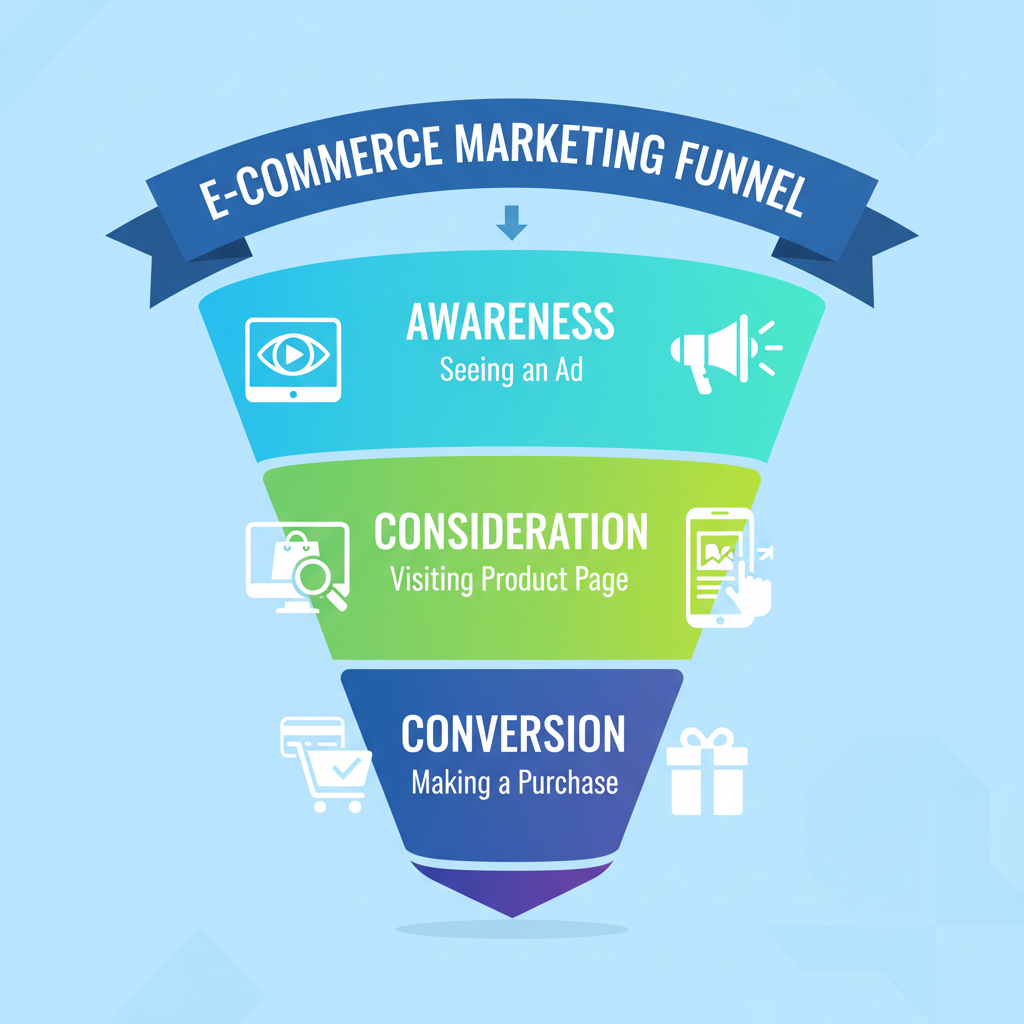
Setting Up Your Meta Business Portfolio
Before running ads, you must set up your infrastructure correctly in the Meta Business Suite. This involves:
- Creating a Business Portfolio (formerly Business Manager).
- Creating or connecting your Facebook Page and Instagram Account.
- Creating a new Ad Account.
- Setting up your Meta Pixel (now called a Dataset) and connecting it to Shopify.
- Verifying your domain.
Ensuring all these assets are properly configured and linked will prevent account issues and suspensions down the line.
The Beginner's Meta Ads Campaign Setup
Complexity is the enemy of progress. Beginners can achieve significant results with a single, simple campaign structure:
- Campaign Type: Use an Advantage+ Budget Campaign (formerly CBO) or an Ad Set Budget Optimization (ABO) campaign for testing. An ABO campaign where you test creatives in a "Cold Testing" ad set is a reliable starting point.
- Objective: Always optimize for "Purchase" from day one. Do not waste time or money on "seasoning" the pixel with other objectives.
- Targeting: Use broad targeting (no specific interests). Let Meta's algorithm find the best audience for your product based on your creative and pixel data.
- Creative Testing: Test new creatives in batches. A common method is to create three video ads that are identical except for the first 3 seconds (the hook). This allows you to isolate which hook performs best.
Analyzing Ad Performance: Key Metrics and KPIs
To make data-driven decisions, you must track the right metrics. Use a tracking spreadsheet to monitor performance daily.
- Off-site KPIs (in Meta Ads Manager): These measure ad performance. Key metrics include Cost Per Click (CPC), Click-Through Rate (CTR), and Cost Per Mille (CPM).
- On-site KPIs (in Shopify): These measure funnel performance. Key metrics include Add to Cart rate, Reached Checkout rate, and Conversion Rate.
Phase 6: Operations and Financial Management
As orders start coming in, efficient operations and disciplined financial management become essential for sustainable growth. This final phase focuses on managing customers, cash flow, and profitability.
Setting Up Your Customer Service System
Good customer service reduces refunds, prevents payment disputes, and improves brand reputation. Start with a dedicated support email address (e.g., [email protected]). Aim to respond to all inquiries within 48 hours. Create templates for common questions like "Where is my order?" to save time. For returns, especially with dropshipping, it's often more economical to offer a partial refund and let the customer keep the product rather than managing a physical return to China.
Mastering Your Finances: Profit vs. Cash Flow
It's crucial to understand the difference between key financial concepts:
- Revenue: The total money coming in. It only validates market acceptance, not profitability.
- Profit: What's left after all costs (product, shipping, marketing, software, etc.) are deducted from revenue.
- Cash Flow: The actual movement of money in and out of your bank account. This is critical because ad costs are often due immediately, while payouts from payment providers can be delayed.
Always maintain cash reserves to cover expenses and potential tax liabilities. A portion of the money in your account is not yours; it belongs to the tax authorities.
Calculating and Monitoring Contribution Margins (DB1 & DB2)
Contribution margins are the most accurate indicators of your business's health.
- Contribution Margin 1 (DB1): Revenue per order minus all variable costs except marketing. It tells you how much profit you make on a product before ad costs and is your breakeven Cost Per Acquisition (CPA).
- Contribution Margin 2 (DB2): DB1 minus your marketing costs (CPA). If this number is positive, your business is profitable and can sustain its own growth. If it's negative, you are losing money on each sale, and scaling will only accelerate your losses.
By regularly monitoring your DB2, you can make informed decisions about whether to increase your ad budget, optimize your funnel, or pause campaigns to troubleshoot issues.
Related Tools
Frequently Asked Questions
Is dropshipping still a viable business model?
Yes, but the model has evolved. Modern dropshipping relies on professional sourcing agents instead of AliExpress for better product quality, faster shipping (6-10 days), and the ability to add custom branding. This approach is highly viable for validating products without large upfront inventory investment.
How much money do I need to start an e-commerce business?
While you don't need to invest thousands in inventory, you do need capital for essential software (like Shopify), business registration, and most importantly, an advertising budget. A disciplined approach focuses on reinvesting initial profits back into the business to fuel growth.
What is the single most important thing for a beginner to focus on?
The most critical focus area is creating a strong, "Cold-Friendly" offer. A compelling offer combined with clear, persuasive messaging in your ads and on your product page will have the biggest impact on your success, often more so than the product itself.
Should I target specific interests on Meta (Facebook) Ads?
No, for beginners, it is highly recommended to use broad targeting. Meta's algorithm has become incredibly sophisticated at finding the right customers based on the data from your pixel and the signals from your ad creative. Focusing on strong creatives is far more effective than trying to manually select interests.
How do I know if my business is truly profitable?
The best measure of true profitability is your Contribution Margin 2 (DB2). This metric calculates your profit per order after subtracting all variable costs, including product, shipping, fees, and advertising. If your DB2 is consistently positive, your business model is financially sound.
Key Terms
- AOV (Average Order Value)
- The average total amount a customer spends in a single transaction on your store. Increasing AOV is a key lever for profitability.
- CPA (Cost Per Acquisition)
- The average advertising cost required to acquire one paying customer. It's a critical metric for measuring the efficiency of your marketing campaigns.
- Dropshipping
- A retail fulfillment method where a store doesn't keep the products it sells in stock. Instead, when a store sells a product, it purchases the item from a third party (like a sourcing agent) and has it shipped directly to the customer.
- Funnel
- The entire customer journey, from the first point of contact (like an ad) through to the final purchase. Optimizing the funnel means improving each step to increase the overall conversion rate.
- Cold-Friendly Offer
- A product bundle or package structured to provide a complete solution to a customer's problem, designed to convert users who have no prior awareness of the brand.
- Contribution Margin (DB1/DB2)
- A measure of profitability per sale. DB1 is profit before ad costs, while DB2 is the final profit after ad costs are deducted. DB2 is the ultimate indicator of a scalable business model.
- ROAS (Return On Ad Spend)
- A marketing metric that measures the amount of revenue earned for every dollar spent on advertising. It is calculated by dividing the revenue generated from ads by the cost of those ads.