Event Match Quality (EMQ) is Meta's 0–10 score measuring how reliably each pixel or CAPI event can be matched to a Meta user, based on the customer information fields you send.
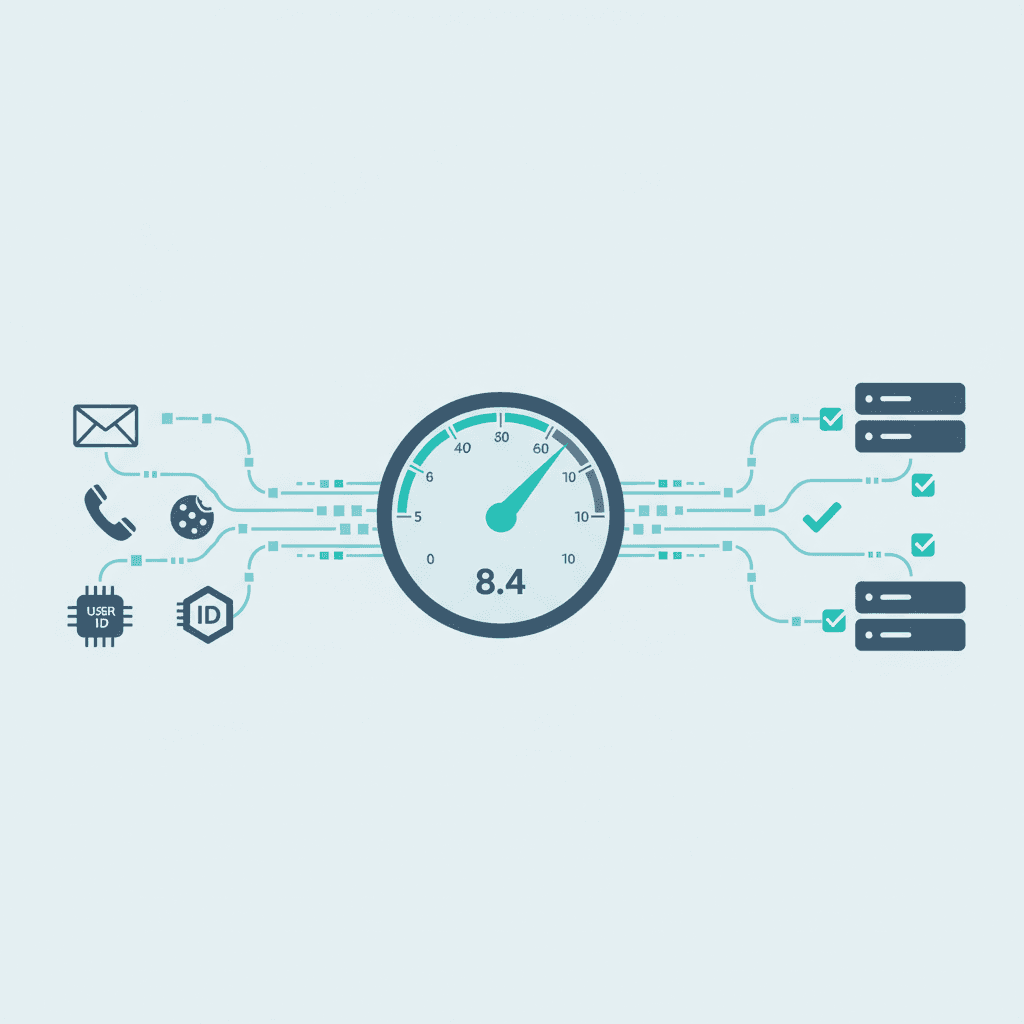
Event Match Quality (EMQ) is Meta's 0–10 score measuring how confidently each pixel or CAPI conversion event can be matched to an actual Meta user, based on the customer-information fields you include in the event payload.## How EMQ is calculatedMeta scores each event in real time. Every customer-data parameter you send — hashed email, phone number, first and last name, city, state, zip, date of birth, gender, fbp/fbc cookies, and external user ID — adds matching confidence. The score reflects the probability that Meta can tie the conversion back to a specific profile in its identity graph.The external_id field carries the most weight. In most account setups, wiring your CRM or CDP's internal user identifier into the CAPI payload is the fastest single-field lift. The fbp and fbc cookie values are the strongest deterministic match signals because they originate from the browser session itself — they connect the server-side event back to the exact browser click that drove the visit.## Why EMQ matters in the Andromeda eraMeta's Andromeda delivery system, which powers Advantage+ campaigns and broad-targeting optimization, relies on high-quality conversion signals to price and allocate impressions accurately. A degraded pixel or CAPI feed doesn't just lose attribution visibility — it quietly shifts your campaigns into a higher-cost, lower-precision optimization state.EMQ below 6.0 often correlates with inflated CPAs and slower exit from the learning phase. Accounts running iOS-impacted traffic are especially exposed: browser-side match rates collapsed after ATT, and many advertisers upgraded to CAPI without ever checking whether the data they were sending was actually sufficient to close the loop.When we reviewed CAPI implementation patterns across a cross-section of in-market accounts on adlibrary, the common denominator among underperforming setups wasn't missing events — it was thin event payloads sending only email and IP with no first-party data enrichment.A practical implementation checklist for Meta ads integrations that actually move the score: send hashed email + phone + name fields, wire fbp/fbc into every server-side hit, and include external_id wherever your stack has a logged-in user.Practitioner principle: EMQ is a diagnostic before it's a metric — check it in Events Manager before optimizing anything else.
EMQ is the single best leading indicator of CAPI health. Accounts running below ~7.0 are effectively operating on degraded signal — Meta can't match enough events to an identity, so optimization is flying partially blind. We've seen accounts in that range paying 20–40% more per optimized outcome than comparable accounts with EMQ above 8.0. Fix the data inputs first; everything downstream gets cheaper.
