Video Watch Time is the average duration users spend watching a video ad before stopping or scrolling — the deeper-funnel companion to hook rate, predicting whether a creative builds enough interest to drive action.
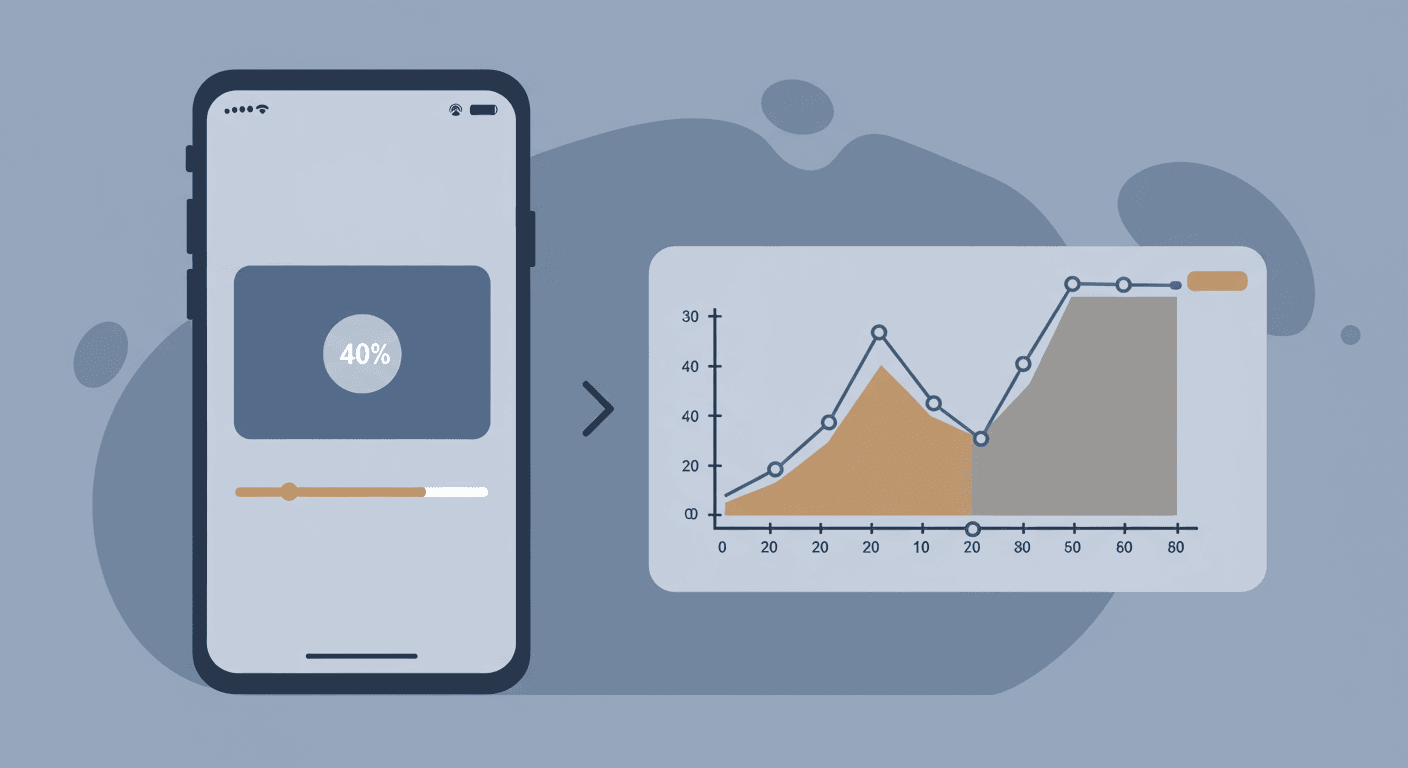
Watch time measures how long, on average, viewers actually stay with your video ad — not whether they started watching, but whether the creative held them long enough to matter. It's the metric that separates ads that earn attention from ads that keep it.
The mechanism is simple: the platform records the seconds watched per impression and averages across all views. On Meta, this appears in Ads Manager under video metrics; on TikTok, in the creative analytics view. What makes it strategically useful is the relationship to conversion: in most tested accounts, watch time is a stronger predictor of downstream action than hook rate or CTR. Two ads with identical 28% hook rates can have radically different watch times — and the one holding viewers 40% longer will almost always out-convert.
Platform definitions aren't interchangeable. Meta's "thru-play" counts at 15 seconds or full completion, whichever comes first. TikTok reports average watch time in raw seconds. YouTube uses view-through metrics with different skip logic. You can't normalize these numbers across platforms without accounting for the denominator — and failing to do so is one of the most common reporting errors in video creative analysis. For a deeper look at how view-through rate fits alongside watch time, that entry covers the distinction in detail.
In 2025–2026, watch time has become more central as Meta's Advantage+ and Andromeda delivery systems increasingly use creative signals — including video retention — to allocate budget within consolidated ad sets. Meridian and Robyn MMM models similarly weight engagement-depth signals over pure reach. iOS signal loss has made server-side creative fatigue detection harder; watch time decay curves have become a practical proxy for when a creative is wearing out on a segment.
I'd recommend treating watch time as a mandatory filter before any creative scaling decision. Sort your test variants by 6-second watch time before looking at CVR — it surfaces winners that hook rate alone hides. The strongest video creatives clear both bars. For practical frameworks on applying this in TikTok-first production, ai for TikTok ads covers the measurement workflow in detail. If you're building a broader video creative stack, best AI UGC video tools is worth reviewing alongside watch time benchmarks.
Watch time clears the view; everything else confirms the buy.
Hook rate tells you the ad earned attention; watch time tells you the ad held it. Two ads with identical hook rates can have 2x different watch times, and the longer-watched one almost always converts better. Most teams never look past hook rate — which means they're making creative scaling decisions on an incomplete signal and missing the winners buried below the fold of their metrics dashboard.
