Conversion Lift is a randomized-control-trial measurement method offered by Meta and Google where a holdout group is excluded from ad exposure, isolating the incremental conversions caused by ads.
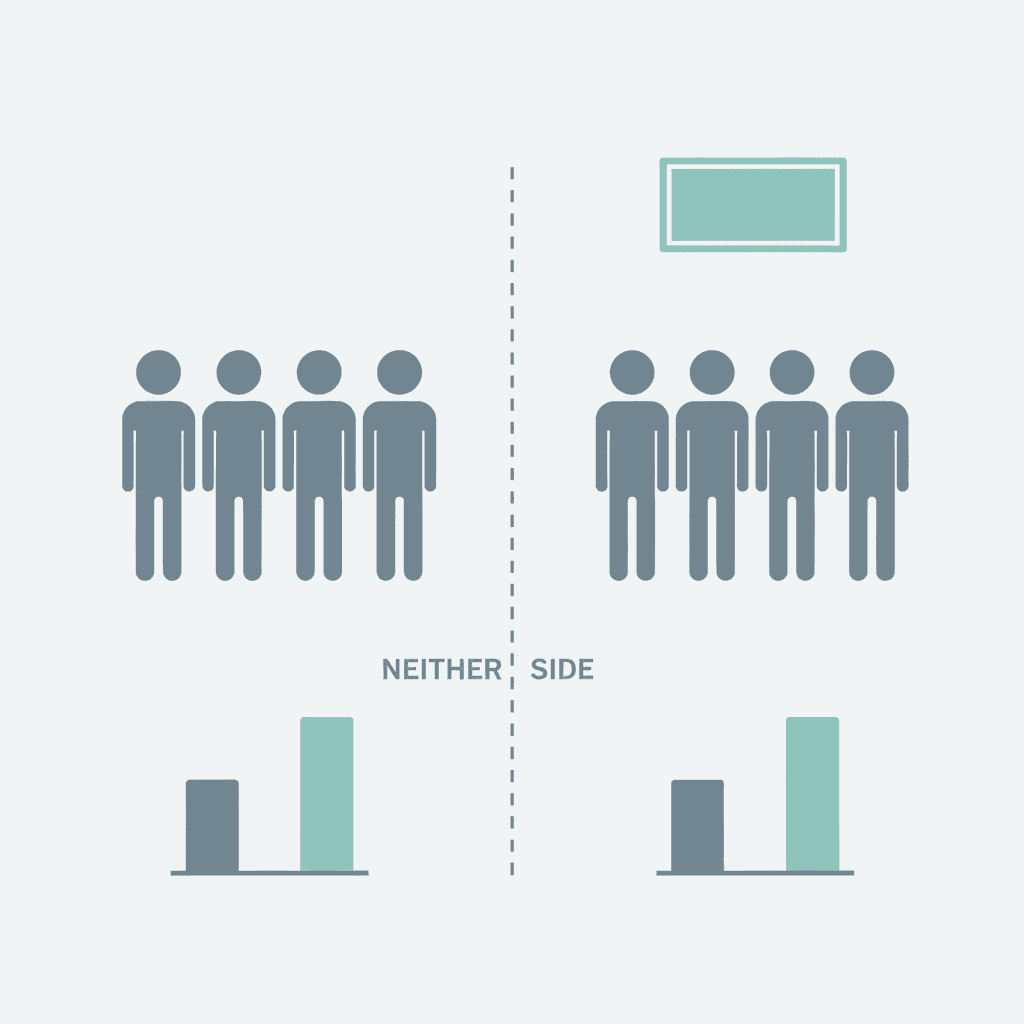
Conversion lift is a measurement method built on randomized controlled trials. An ad platform randomly assigns users to two groups before a campaign launches: one group sees the ads (exposed), the other does not (holdout). Whatever difference you observe in conversion rates between those two groups at the end of the study — that gap is the incremental effect of your advertising.
The mechanism is simple in theory and demanding in practice. Holdout groups need to be large enough for statistical power: if your conversion volume is below roughly 10,000 events over the study window, the confidence interval swallows the signal. Meta and Google run these tests natively — Meta requires roughly $30,000 in spend over a 4–6 week window; Google's lift product in Display & Video 360 supports both user-split and geo-split designs, which is useful when you want to test brand-search cannibalization.
The reason this matters in 2025–2026 is that standard attribution has become structurally unreliable. iOS privacy changes degraded pixel-level signal, multi-touch attribution models are making increasingly confident claims on increasingly thin data, and platform-reported ROAS figures now reflect algorithmic modeling as much as observed behavior. When I've audited accounts running both last-click attribution and a concurrent lift study, the overstatement of ROAS is typically 30–60%. Attribution tells you which ad touched a conversion; lift tells you whether the conversion needed the ad at all.
That distinction is the reason lift is gaining ground alongside MMM tools like Google Meridian and Meta's Robyn. As covered in our breakdown of the death of attribution and explored further in the ai analytics tools roundup, the direction of measurement is toward triangulation — lift, MMM, and holdout-corrected ROAS working together rather than any single number claiming authority.
Treat lift as a calibration exercise, not a campaign optimization tool. Run it once per major channel, per year, to reset your ROAS expectations against reality.
Last-click attribution credits ads for conversions that would have happened anyway — organic demand, branded search, repeat buyers who were going to purchase regardless. Conversion lift is the only standardized way to measure how much your ad spend actually grew the business. Most accounts we review overstate true incremental ROAS by 30–60%, which means scaling decisions are being made on a number that doesn't reflect reality. The fix is to run a lift test, then anchor your targets to the incremental figure.
