Advantage+ Shopping Campaigns (ASC+) is Meta's automated campaign type for e-commerce purchase outcomes, bundling audience, placement, and creative automation into a single setup.
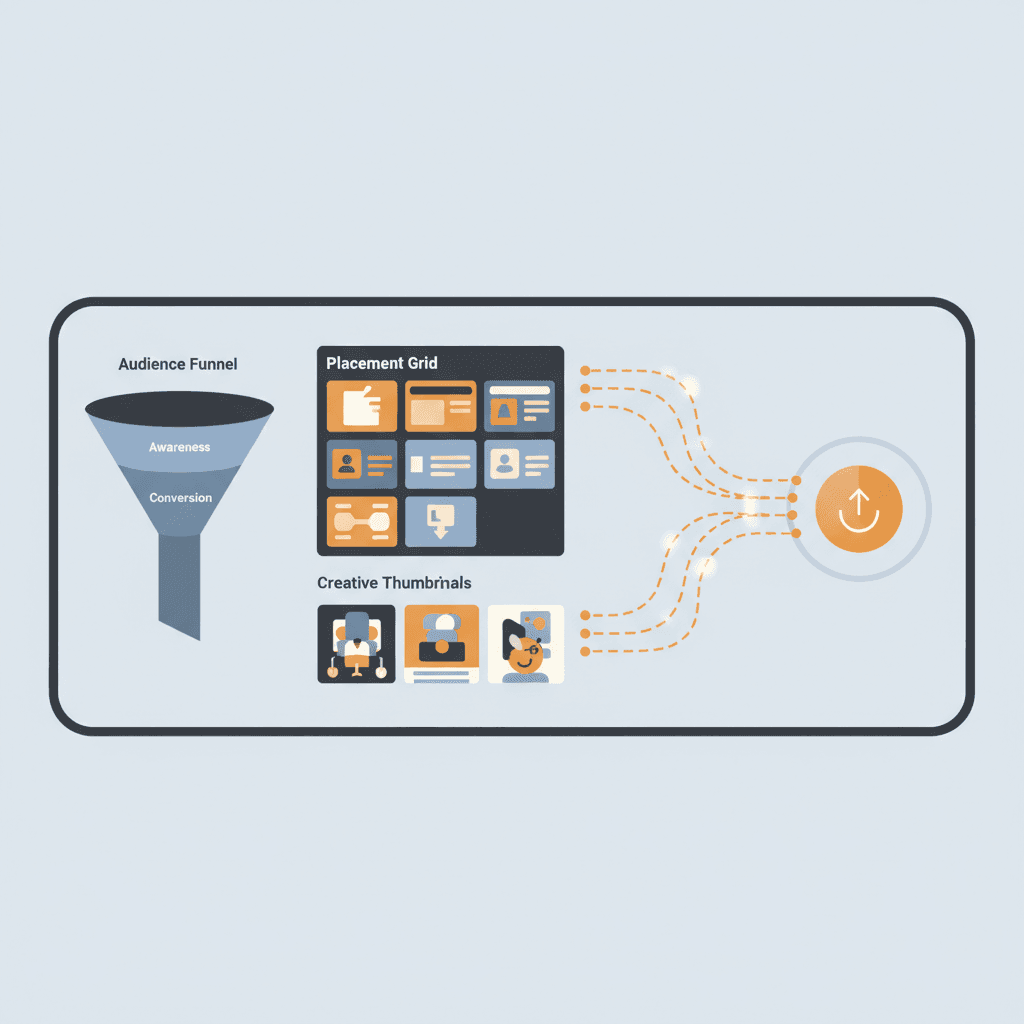
Advantage+ Shopping Campaigns (ASC+) is Meta's consolidated campaign type built for direct-purchase e-commerce. You feed it a product set, a budget, and creative — it handles audience discovery, placement allocation, and bid optimization automatically. There is no manual ad set structure; ASC+ runs as a single unit.
The mechanism works in two layers. At the signal layer, ASC+ draws on every available purchase signal — pixel events, CAPI server-side data, on-Facebook purchase behavior — and compresses them into a single delivery model. At the delivery layer, Meta's algorithm tests audience segments, placements, and creative combinations simultaneously, converging on the configurations that drive purchases at your target cost. The existing-customer budget cap is the main lever you control: it sets an upper bound on what percentage of spend can target people who have already purchased from you, defaulting to roughly 10%. I've found that brands with strong LTV profiles often benefit from pushing this cap to 20–30%.
In the post-Advantage+ environment of 2025–2026, ASC+ is positioned as the recommended campaign structure for most DTC accounts. Meta's Andromeda ranking overhaul made campaign objective selection less granular than it used to be — much of the targeting and placement decision-making that advanced buyers previously managed manually has moved inside the automation layer. ASC+ reflects that consolidation directly. For accounts on shopping ads placements, it also gives access to catalog-powered dynamic ad formats not available through manual campaign types at the same coverage.
ASC+ doesn't replace all campaign types. Diagnostic A/B audience tests still require a parallel ABO structure because ASC+ doesn't allow clean audience splits. Creative testing is cleaner outside ASC+ when you need isolated variables. But for accounts where the primary goal is purchase volume, ASC+ has consumed most of what buyers used to manage manually.
For context on how ASC+ fits into the broader Meta automation surface, ad creation software and AI platforms covers the full stack that feeds campaigns like this. The four-layer AI framework for Facebook ads is useful for understanding where ASC+ sits in relation to creative intelligence and measurement.
Practitioner principle: treat ASC+ as a delivery vehicle, not a strategy — the strategy lives entirely in your creative diversity and budget cap settings.
ASC+ has absorbed most of what mid-spend DTC brands used to manage manually — audience splits, placement toggles, bid adjustments. Knowing which decisions ASC+ now owns saves hours of setup work each week. More importantly, it focuses your optimization effort on the variables that still move the needle: creative variance, the existing-customer budget cap, and product set composition.
