Ad Rejection Rate is the share of submitted ads that Meta's policy review system blocks before delivery, typically driven by image, copy, landing-page, or category-restriction violations.
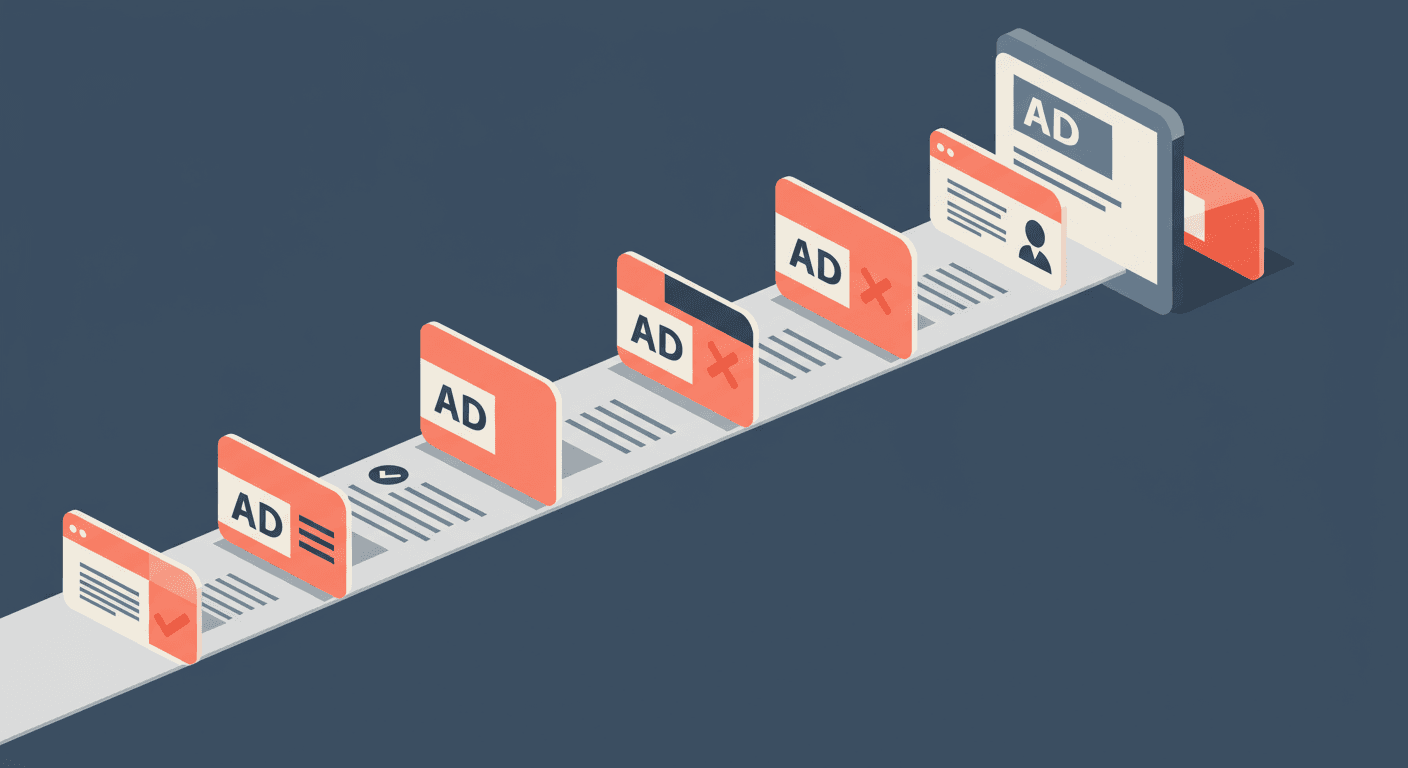
Ad rejection rate measures the share of submitted ads that Meta's policy review system blocks before delivery. When that number climbs past 10%, it's rarely a platform glitch — it's the policy speaking clearly about something in the creative or landing page.
The mechanism is straightforward. Meta's automated review pipeline checks every ad submission against a ruleset covering copy claims, image content, landing-page alignment, and category-specific restrictions. An ad that triggers a policy flag gets blocked at the asset level — the specific image or copy combination that failed carries a rejection record. Resubmitting the same creative without changes does not reset that record.
Two layers drive the majority of rejections. The first is personal-attribute language: copy that addresses the viewer's body, health condition, or financial situation using a "you" construction ("you need to lose weight"). Meta's policies prohibit this framing explicitly. The second is category-restricted content — health, finance, housing, employment, and social issues all carry elevated scrutiny under Meta's Special Ad Category framework. Accounts in these verticals run baseline rejection rates of 10–25% even with careful copy.
In 2025–2026, the Andromeda ranking system added another variable. Ads that historically generate high hide-ad rates carry that history forward, compounding rejection patterns on accounts with a track record of low-quality submissions. Advantage+ campaigns that dynamically generate copy variants also multiply exposure to policy violations if the base template contains borderline phrasing.
Tracking rejection rate requires pulling data from Meta's Ads Manager or the Marketing API. Accounts running bulk creation workflows at 100+ variants per week should monitor it as a standing KPI — a 5% weekly uptick is the signal to audit ad creative templates before queuing more variants. The ad creation software category is catching up, with pre-flight policy checks becoming standard in professional tooling.
The practitioner principle: rejection rate is a lagging indicator of template quality — fix the template, not the individual ad.
A 15%+ ad rejection rate is a hidden tax on creative throughput. Accounts running bulk-creation workflows at 500 variants per week with 22% rejection means more than one in five ad variants never delivered — wasted creative budget plus the downstream account-health cost of a high-volume rejection pattern.
Rejection patterns compound. An account with a history of policy violations gets slower automated review and a lower starting relevance baseline. Fixing the copy template costs an afternoon; rebuilding account standing costs months.
